Same Energy Class, 16 Percent More Water Per Kilogram
Four washing machines in our database share the same A energy class. Their real water use per kilogram of laundry still ranges from 5.05 to 5.88 litres.
By Nora Fischer · Last updated 19 July 2026
Researched and drafted with AI language-model assistance from CompareHomeAppliances' own verified spec database and cited public sources, per our AI-content disclosure.
Five washing machines in our database share the exact same headline energy class, A. Yet among the four that publish a water-per-cycle figure, real water use per kilogram of rated capacity ranges from 5.05 litres on the LG F4V910WTSE TurboWash 360 to 5.88 litres on the Miele WWD020 WCS, a gap of 16 percent. The label tells you the letter. It does not tell you which machine actually pours less water down the drain per load.
Key takeaways:
- Of five A-class washing machines in our database, the four that publish water use per cycle range from 5.05 to 5.88 litres per kilogram of capacity, a spread of 16 percent between the LG F4V910WTSE TurboWash 360 and the Miele WWD020 WCS.
- The LG, at 10.5 kg the largest-capacity machine in the group, is also the most water-efficient per kilogram and the only one of the four with an A spin class rather than B.
- The Miele, at 8 kg the smallest-capacity machine in the group, is the least water-efficient per kilogram of the four.
- The Bosch Series 6 WGG244F9GB (5.33 L/kg) is the only one of the five that publishes a price, 721.00 EUR, so this data cannot support a price-versus-water-efficiency claim beyond that single point.
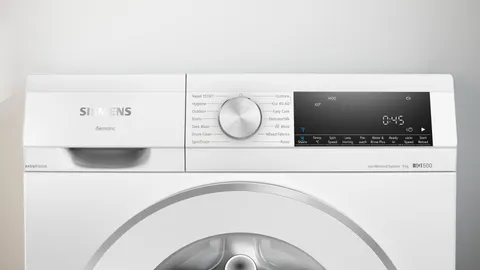
- The Siemens iQ500 WG44G209GB shares the same A energy class as the other four but does not publish a water-per-cycle figure, so it is excluded from the ranking even though it belongs to the same class group.
How can the same energy class hide a 16 percent water gap?
The EU’s energy label reduces a washing machine to a single letter, A through G on the current scale, but that letter is a range of scores on an efficiency index, not one fixed number. Two machines can land anywhere inside the same band and still differ meaningfully on the underlying figures the index is built from, including water consumption. That is exactly what shows up in our own database once you look past the letter: five washing machines are all rated A, and the four of them that disclose a water-per-cycle figure spread from 5.05 to 5.88 litres per kilogram of capacity.
This is a different finding from the one we made in our earlier piece on how energy-class letters compare across different appliance categories like dryers, fridges and TVs, where the letters are not even on the same scale. Here, the letters are directly comparable, all five machines sit in the same category on the same A-to-G scale, and the gap still exists. A shared class tells you these machines cleared a similar efficiency bar overall. It does not tell you they use water the same way.
Does a bigger drum use water more efficiently?
In this sample, yes, though with a sample this small it reads more like a pattern than a rule. The LG F4V910WTSE TurboWash 360 has the largest rated capacity of the group at 10.5 kg, uses 53 litres per cycle, and comes out to 5.05 litres per kilogram, the lowest of the four. The Miele WWD020 WCS sits at the other end: the smallest capacity at 8 kg, 47 litres per cycle, and 5.88 litres per kilogram, the highest.
One detail worth flagging before you credit capacity alone: the LG is also the only one of the four with an A spin class, while the Bosch, Samsung and Miele all carry a B spin class. A more efficient spin cycle can extract more water from the load before the drum stops, which plausibly plays into the per-kilogram figure alongside drum size. With four machines in the comparison, this is a correlation worth checking model by model when you shop, not a proven rule that a bigger drum always wins on water.
What does the spread actually look like machine by machine?
| Model | Capacity (kg) | Water per cycle (L) | Water per kg (L/kg) | Energy class | Spin class | Price (EUR) |
|---|---|---|---|---|---|---|
| LG F4V910WTSE TurboWash 360 | 10.5 | 53 | 5.05 | A | A | N/A |
| Bosch Series 6 WGG244F9GB | 9 | 48 | 5.33 | A | B | 721.00 |
| Samsung Series 5 WW90T534DAW/S1 | 9 | 50 | 5.56 | A | B | N/A |
| Miele WWD020 WCS | 8 | 47 | 5.88 | A | B | N/A |
| Siemens iQ500 WG44G209GB | 9 | N/A | N/A | A | B | N/A |
The Siemens iQ500 WG44G209GB is left in the table on purpose. It carries the same A energy class as the other four and belongs in the same class group, but its manufacturer listing does not publish a water-per-cycle figure, so it cannot be placed on the per-kilogram ranking. We would rather show that gap honestly than quietly drop the machine from the comparison.
The Bosch Series 6 WGG244F9GB sits almost exactly in the middle of the four ranked machines at 5.33 L/kg, and it is also the only one of the five with a published price, 721.00 EUR. That is a single data point, not a trend, so we are not going to claim the more water-efficient machines cost more or less. If you want to check the Samsung Series 5 WW90T534DAW/S1 or any of the others against current pricing, the washing machines category and the compare tool are the places to do that, since price is not something our own dataset can settle for the whole group yet.
What does this mean for your water bill?
A 16 percent gap on paper is a small number until you multiply it by a year of laundry. A household running four washes a week on the Miele’s 47-litre cycle uses roughly 9,776 litres of water a year for that load size; the same weekly routine on the LG’s 53-litre cycle, which handles 2.5 kg more laundry per load, uses roughly 11,024 litres, but covers noticeably more washing per cycle. Litres per cycle and litres per kilogram tell two different stories, and the per-kilogram figure is the one that actually normalizes for how much laundry a machine handles before you judge it on water use.
None of these four machines publish an annual kWh figure alongside their water numbers in our database, so we are not going to bolt on an energy-cost estimate we cannot verify. What you can do is take a machine’s own water-per-cycle and capacity figures, plug them into our running-cost tool alongside its energy class and any price you find on the manufacturer’s site, and get a real yearly estimate for your own laundry habits rather than a generic industry average.
What this data cannot tell you
Four machines is a real finding, not a definitive one. It is enough to show that “A class” is not a promise of identical water use, and enough to show a consistent direction in this small sample between capacity, spin class and water per kilogram. It is not enough to say every large-drum A-class machine will beat every small-drum one, and it is not enough to rank these five machines on price, since only the Bosch discloses one. Treat the 16 percent figure as a real, citable gap inside our current dataset, and treat the capacity-and-spin pattern as a lead worth checking against the actual spec sheet of whichever machine you are considering, not a shortcut that replaces reading it.
If you are choosing between two A-class washing machines and the water-per-cycle figure is published on both, divide it by the rated capacity before you compare. That single piece of arithmetic is what separates “same letter” from “same machine.”
Appliances in this analysis
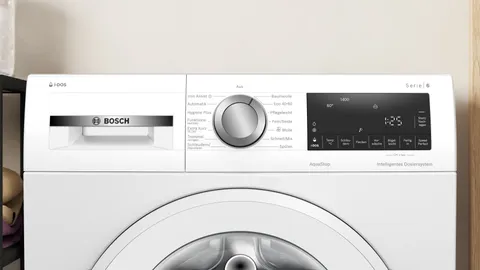
Bosch
Series 6 WGG244F90
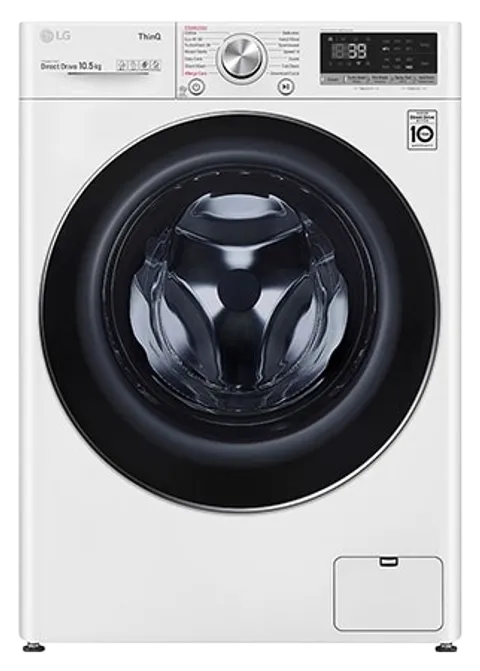
LG
F4V910WTSE (TurboWash 360, AI DD V9)
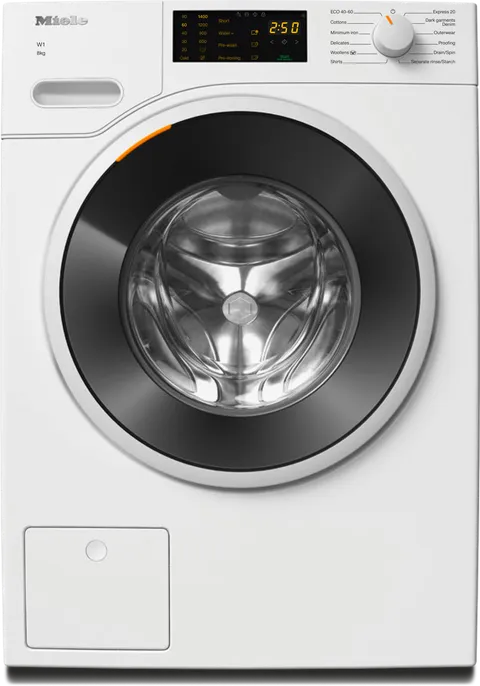
Miele
WWD 020 WCS (W1 front-loader, 8kg)
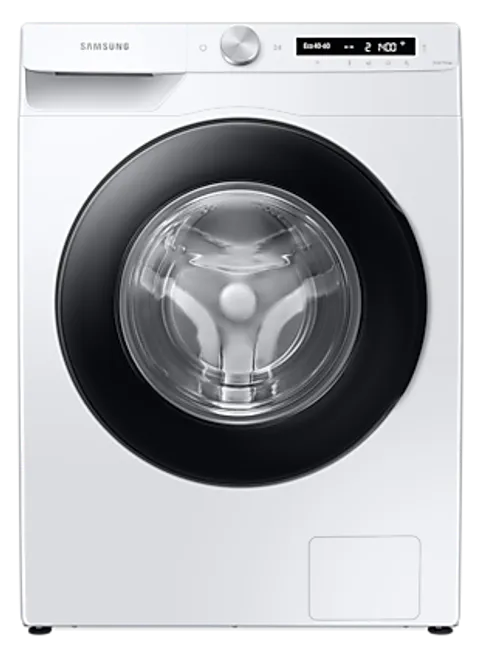
Samsung
Series 5+ WW90T534DAW/S1
Siemens
iQ500 WG44G209GB
Related categories
Frequently asked questions
Why do two washing machines with the same A energy class use different amounts of water? +
The EU's A energy class is a range of index scores, not one fixed water or energy figure, so two machines can both qualify for A while using noticeably different amounts of water per cycle. In our database, the four A-class washing machines that publish a water figure range from 5.05 to 5.88 litres per kilogram of rated capacity, a gap driven by drum design, load sensing and rated capacity rather than the energy label itself.
Does a bigger-capacity washing machine use water more efficiently per kilogram of laundry? +
Not automatically, but in our sample the largest-capacity machine was also the most water-efficient per kilogram. The LG F4V910WTSE TurboWash 360 (10.5 kg) uses 5.05 litres per kilogram, the lowest of the four, while the smaller 8 kg Miele WWD020 WCS uses 5.88 litres per kilogram, the highest. The LG is also the only one of the four with an A spin class rather than B, so its efficiency edge may come from spin performance and drum design as much as sheer capacity. With only four machines in the comparison, treat this as a pattern worth checking model by model, not a rule that a bigger drum always wins.
How can I turn water-per-kilogram figures into an actual water or energy bill estimate? +
Multiply a machine's water-per-cycle figure by how many washes you run per week to get a rough annual water volume, then weigh that against the appliance's energy class and any published annual kWh figure. Our running-cost tool does this calculation for you and turns a model's own spec-sheet numbers into an estimated yearly cost, so you can compare the water-efficiency gap against the machine's price rather than guessing.
Sources
More from the blog