The 15-Bar Coffee Machine Spec That Means Nothing
Every bean-to-cup and espresso machine in our database is rated at 15 bar of pump pressure. The number that actually separates them is price and grind control.
By Nora Fischer · Last updated 19 July 2026
Researched and drafted with AI language-model assistance from CompareHomeAppliances' own verified spec database and cited public sources, per our AI-content disclosure.
Every coffee machine in our database claims exactly 15 bar of pump pressure. Not most of them, all 5, from the 268.90 EUR Delonghi Magnifica S to the 1,027.00 EUR Jura E8, a price range of 758.10 EUR, roughly 3.8 times the cost from cheapest to priciest. A spec that is identical across a nearly fourfold price spread is not the spec that explains the price spread.
Key takeaways:
- All 5 coffee machines in our database independently list 15 bar of pump pressure, from the 268.90 EUR Delonghi Magnifica S to the 1,027.00 EUR Jura E8, with zero variation in this one spec across a 3.8x price range.
- Price is the number that actually moves: a 758.10 EUR gap separates the cheapest and priciest machine we track, and pump pressure explains none of it.
- Milk handling is a real dividing line: only the cheapest machine, the Delonghi Magnifica S, is fully manual; the other 4 all include an auto-frother or steam wand.
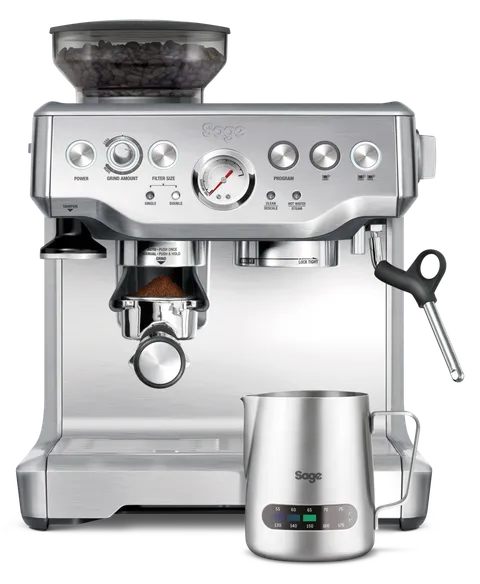
- Grind settings do not track price cleanly: the 1,027.00 EUR Jura E8 offers 7 settings, while the 489.00 EUR Sage Barista Express, less than half the price, offers 16.
- Where bean hopper size is disclosed, it sits in a narrow band: 250g on the Sage, 275g on the Philips, 280g on the Jura.
Why does every machine claim exactly 15 bar?
Fifteen bar has become the default number printed on the box, in the same way “500 GSM” shows up on every towel regardless of how it actually feels. It is not wrong, it is just no longer informative, because everyone converged on it.
Part of the reason is genuinely technical. Real home espresso extraction happens well under 9 to 10 bar of resistance at the coffee puck itself; the pump rating on the box is the pump’s maximum output, not the pressure the coffee experiences during a shot. Once a machine’s pump can comfortably clear that 9 to 10 bar threshold, pushing the spec higher adds very little to what ends up in the cup. Manufacturers spec pumps with headroom above what daily brewing needs, which is a sensible engineering choice, but it also means 15 bar reads as a floor the whole market cleared years ago, not a ceiling any one machine is pushing against.
The other part is simpler: it is a number that fits neatly on a spec sheet and sounds impressive next to a competitor’s box, so nobody wants to be the one machine that lists 9 bar even if 9 bar is functionally identical in the cup. Once one major brand normalized 15 bar as the marketing figure, the rest followed, and the number stopped doing the job a spec is supposed to do, telling two products apart.
If pressure is not the differentiator, what is?
Price is. Here is every coffee machine in our database, side by side.
| Model | Type | Price (EUR) | Pump pressure (bar) | Grind settings | Milk system | Water tank (L) |
|---|---|---|---|---|---|---|
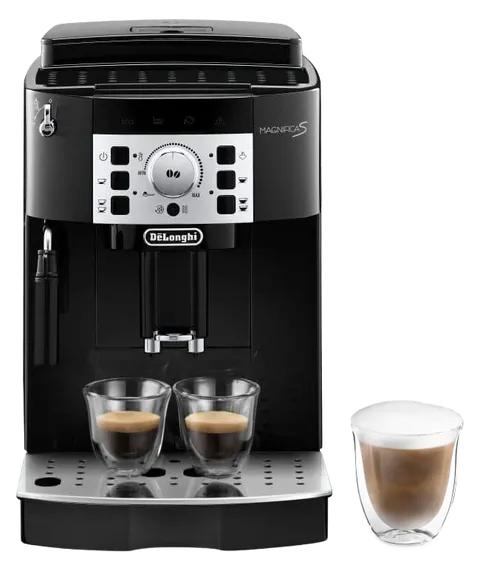
| Delonghi Magnifica S ECAM22.110.B | Bean-to-cup | 268.90 | 15 | N/A | Manual | 1.8 |
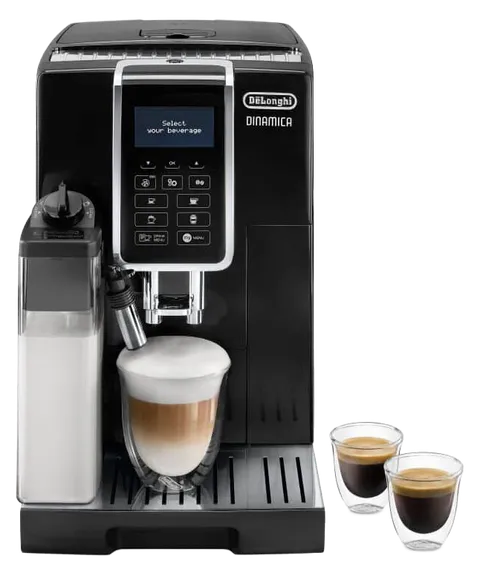
| Delonghi Dinamica ECAM350.55.B | Bean-to-cup | 435.99 | 15 | N/A | Auto-frother | 1.8 |
| Sage Barista Express BES875 | Espresso-pump | 489.00 | 15 | 16 (conical burr grinder) | Steam wand | 2.0 |
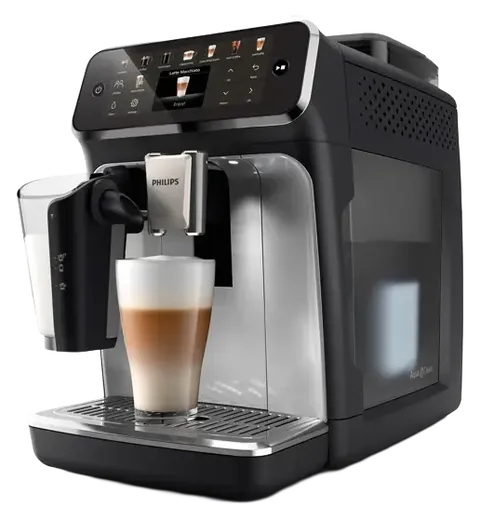
| Philips Series 5500 EP5546/70 | Bean-to-cup | 514.48 | 15 | 12 | Auto-frother | 1.8 |
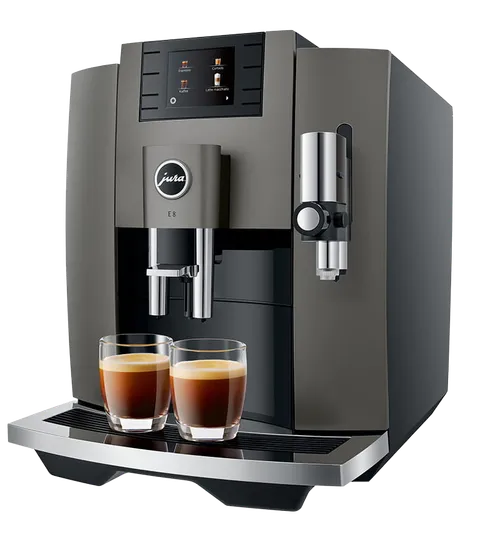
| JURA E8 EB | Bean-to-cup | 1,027.00 | 15 | 7 | Auto-frother | 1.9 |
Every row reads 15 in the pressure column. Every other column moves. The Delonghi Magnifica S, the cheapest machine here at 268.90 EUR, is also the only one with a fully manual milk system, no grinder settings exposed to the user, and the smallest feature set overall. The JURA E8, at 1,027.00 EUR, adds an auto-frother, a larger water tank, and a wider set of programmable drinks, but notably not more pressure and, as the next section shows, not more grind adjustability either.
Does more money buy more grind control?
Not cleanly, and this is worth being honest about, because it complicates the tidy story that a bigger number on the price tag always buys a bigger number somewhere else. Among the 3 machines in our database that disclose a grind-setting count, the Sage Barista Express offers 16 settings on its built-in conical burr grinder for 489.00 EUR. The Philips Series 5500 offers 12 for 514.48 EUR, a small step down in adjustability for a small step up in price. The JURA E8, more than double the Sage’s price at 1,027.00 EUR, offers only 7.
That is not a defect in the Jura. Its 7 settings likely reflect a different design philosophy, an automatic grinder tuned by the manufacturer around fewer, more deliberate steps rather than a wide manual range, and its price is buying other things: a larger bean hopper, a bigger water tank, and a more built-out drink menu. But if grind adjustability specifically is what you are shopping for, this table is the reminder that the most expensive machine in a lineup is not automatically the one with the most control over it. Where bean hopper capacity is disclosed, the pattern is gentler: 250g on the Sage, 275g on the Philips, 280g on the Jura, a narrow spread that tracks price only loosely.
Is manual or automatic milk frothing worth the premium?
This is where price does buy something consistent. The Delonghi Magnifica S is the only machine in our database with a fully manual milk system, and it is also the cheapest at 268.90 EUR. Every other machine we track, the Delonghi Dinamica, the Sage Barista Express, the Philips Series 5500, and the Jura E8, includes either an auto-frother or a steam wand.
Whether that upgrade is worth paying for comes down to how you actually drink coffee. An auto-frother saves time on every milk-based drink and is easier to use consistently, which matters if you are making several cappuccinos or lattes a day for a household. A manual steam wand, the kind the Sage Barista Express pairs with its wider grind range, gives a practiced user more control over microfoam texture, but it is slower and has a learning curve. If your daily cup is closer to a straight espresso or black coffee, none of the milk hardware in this comparison changes your experience, and paying more for it is paying for a feature you will not use.
The honest summary is that 15 bar tells you nothing about any of these 5 machines. Price, milk handling, and grind control do, and they do not all move together. Compare any two of these machines side by side, spec for spec, in our coffee machines category or head straight to the compare tool to line up two specific models before you decide which trade-off is worth your money.
Appliances in this analysis
Jura
E8 Dark Inox (EB)
De'Longhi
Dinamica ECAM350.55.B
De'Longhi
Magnifica S ECAM22.110.B
Sage Appliances
Barista Express BES875
Philips
Series 5500 Fully Automatic Espresso Machine EP5546/70
Related categories
Frequently asked questions
Does a higher bar rating mean better espresso? +
Not meaningfully, past a point. Home espresso extraction happens well under 9 to 10 bar of resistance at the puck, so once a pump can reach that range, extra pressure on paper buys very little in the cup. Manufacturers commonly spec pumps above what daily brewing needs, as headroom rather than a performance feature. All 5 machines in our database, from the 268.90 EUR Delonghi Magnifica S to the 1,027.00 EUR Jura E8, independently list 15 bar, which is exactly why the number cannot separate any of them.
What actually separates a 268.90 EUR coffee machine from a 1,027.00 EUR one? +
Not pump pressure. In our database it is the milk system (manual steam wand only, versus a built-in auto-frother), grind control (some machines expose 7 to 16 grind settings, others expose none to the user), bean hopper size, and programmable drink options. The 758.10 EUR gap between the cheapest and priciest machine we track buys convenience and control, not a stronger pump.
Is manual or automatic milk frothing worth paying more for? +
It depends on how much you actually froth. An auto-frother or built-in steam system saves real time and is easier for a household making several milk drinks a day, which is why 4 of the 5 machines in our database include one. A manual steam wand, like the one on the cheapest machine we track, costs less and gives a barista more control over microfoam texture, but it takes practice and a few extra minutes per cup. If you drink mostly black coffee or espresso, paying more for milk automation you rarely use is not a good trade.
Sources
More from the blog