The 650-Euro Oven Gap That Buys Almost No Efficiency
Two single ovens in our database differ by 650 euros. Their energy use per baking cycle differs by 0.02 kWh, a difference too small to matter.
By Nora Fischer · Last updated 19 July 2026
Researched and drafted with AI language-model assistance from CompareHomeAppliances' own verified spec database and cited public sources, per our AI-content disclosure.
Two single ovens in our database sit 650 EUR apart: the Bosch Series 8 HBG7784B1 at 1,349.00 EUR and the Miele H 7264 BP CulinArt at 1,999.00 EUR, a 48% premium. Their electricity use tells almost the opposite story. Among the four ovens in our set that publish an energy-per-cycle figure, the entire spread is 0.02 kWh, from 0.69 kWh up to 0.71 kWh. A gap that size will not show up on a real electricity bill. The 650 euros is buying something else.
Key takeaways:
- Only 2 of the 5 single ovens in this comparison disclose a price: the Bosch Series 8 HBG7784B1 at 1,349.00 EUR and the Miele H 7264 BP CulinArt at 1,999.00 EUR, a gap of 650 EUR, about 48% more for the Miele.
- 4 of the 5 ovens disclose energy use per baking cycle, and it is tightly clustered: 0.69 kWh for the Bosch, the AEG 6000 SenseCook, and the Neff N70, and 0.71 kWh for the Samsung Series 4 Dual Cook, a spread of just 0.02 kWh, roughly 2.9%.
- The Miele, the most expensive oven in the set, is the only one of the five with no disclosed energy-per-cycle figure at all.
- Cavity volume differs by only 5 litres between the 71L ovens (Bosch, AEG, Neff) and the 76L ovens (Miele, Samsung), about a 7% difference, nowhere near enough to explain a 650 EUR gap on its own.
- What genuinely differs with price and brand is features: heating-function count, shelf levels, cleaning technology (pyrolytic vs catalytic), and extras like Miele’s steam function, Samsung’s dual-zone cavity, and AEG’s meat probe.
Does a pricier oven use less electricity?
Based on our database, no. Four of the five single ovens we track publish an energy-per-cycle figure, and three of them, the Bosch Series 8 HBG7784B1, the AEG 6000 SenseCook OS6PB50AM, and the Neff N70 B57CR22N0B, land on exactly the same number: 0.69 kWh per cycle. The Samsung Series 4 Dual Cook NV7B44205AS comes in at 0.71 kWh, only 0.02 kWh higher.
That is the whole spread, top to bottom, across every oven in this data set that discloses the figure. It holds regardless of price tier, brand positioning, or feature count. The Bosch, at 1,349.00 EUR the pricier of the two ovens that disclose cost, and the Neff, which discloses no price at all, both land on 0.69 kWh. Efficiency here tracks category and cavity design, not the number on the price tag.
| Model | Cavity (L) | Energy/cycle (kWh) | Price (EUR) | Cleaning | Heating functions | Shelf levels |
|---|---|---|---|---|---|---|
| Bosch Series 8 HBG7784B1 | 71 | 0.69 | 1,349.00 | Pyrolytic | 14 | 5 |
| Miele H 7264 BP CulinArt | 76 | N/A | 1,999.00 | Pyrolytic | N/A | 5 |
| AEG 6000 SenseCook OS6PB50AM | 71 | 0.69 | N/A | Pyrolytic | N/A | N/A |
| Neff N70 B57CR22N0B | 71 | 0.69 | N/A | Pyrolytic | 12 | 4 |
| Samsung Series 4 Dual Cook NV7B44205AS | 76 | 0.71 | N/A | Catalytic | N/A | N/A |
What does the extra 650 euros actually buy?
Not a lower electricity bill, based on what these two ovens disclose. The Bosch Series 8 HBG7784B1 and the Miele H 7264 BP CulinArt both use pyrolytic self-cleaning and both offer 5 shelf levels, so those two factors are a wash between them. What actually changes is cavity size and feature set. The Miele’s cavity is 76 litres against the Bosch’s 71, and the Miele adds a steam function that the Bosch listing does not carry. Bosch, for its part, discloses 14 heating functions, among the highest count in our data set, while Miele does not publish a comparable heating-function number for us to weigh against it.
Widen the comparison past just these two and the same pattern holds. The Neff N70 B57CR22N0B discloses 12 heating functions and 4 shelf levels, both slightly below the Bosch’s 14 and 5, and shares the Bosch’s 0.69 kWh figure exactly. The AEG 6000 SenseCook OS6PB50AM adds a meat probe as one of its distinguishing extras. The Samsung Series 4 Dual Cook NV7B44205AS splits its 76-litre cavity into two independently controlled zones, a genuinely different cooking feature, not an efficiency one. None of these differences move the needle on kWh per cycle in any direction that matters. They are all reasons to pick one oven over another, just not energy reasons.
Why does Miele not publish an energy figure?
Because it is simply not in the manufacturer data we track for this model, and we do not fill that kind of gap with a guess. It is worth flagging on its own terms, though: the Miele is the most expensive oven in this set of five, and it is the only one with no disclosed running-cost number at all. A shopper comparing on price alone has no energy figure to weigh against the extra 650 euros, only the cavity size and feature differences covered above. If running cost matters to your decision, that absence is itself useful information, not a neutral blank.
Does cavity volume explain the price gap?
Only a little. The 71-litre ovens, Bosch, AEG, and Neff, and the 76-litre ovens, Miele and Samsung, differ by 5 litres, about a 7% difference in usable cavity space. That is a real, measurable difference if you regularly cook large trays or multiple dishes at once, but it is a modest jump, not the kind of capacity leap that typically justifies a 48% price premium on its own. The rest of the Bosch-to-Miele gap sits in brand positioning, build materials, and the added steam function rather than in raw interior space.
Does pyrolytic vs catalytic self-cleaning affect running cost?
It is a genuinely different technology, and worth being precise about. Pyrolytic cleaning, used by 4 of the 5 ovens here, heats the empty cavity to a very high temperature and burns residue to ash, and it is generally considered the more thorough of the two methods. Catalytic cleaning, used only by the Samsung Series 4 Dual Cook in this set, relies on a rough, coated liner that absorbs grease at normal cooking temperatures and needs an occasional higher-heat burn-off to finish the job.
A pyrolytic cycle does draw noticeably more electricity than a standard bake, that much is well established for the technology in general, but none of the manufacturers in our data set publish that draw as a separate figure. So the 0.69 to 0.71 kWh numbers above describe a baking cycle only, not an occasional self-clean cycle on top of it. Treat the per-bake figure as the running-cost baseline, and treat pyrolytic cleaning as an added, unquantified cost that happens a handful of times a year rather than every time you use the oven.
The buying decision
If running cost is your priority, the data here gives you very little reason to pay more. The Bosch, AEG, and Neff all land on 0.69 kWh per cycle regardless of price or feature count, and the Samsung’s 0.71 kWh is close enough to be within normal measurement noise. Spend the 650 euros only if you specifically want the Miele’s larger cavity, its steam function, or the brand and build quality that come with it, not because you expect a lower electricity bill. If you are deciding between two specific ovens, put their full spec sheets side by side in our oven comparison tool before you commit, and browse the full ovens category if you are still narrowing down which features actually matter to how you cook.
Appliances in this analysis
AEG
6000 SenseCook OS6PB50AM
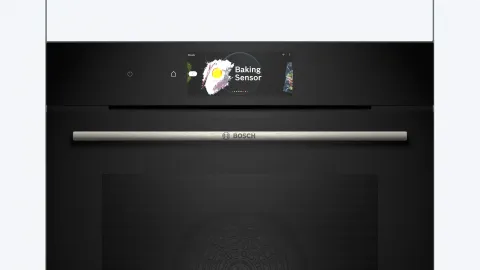
Bosch
Series 8 HBG7784B1
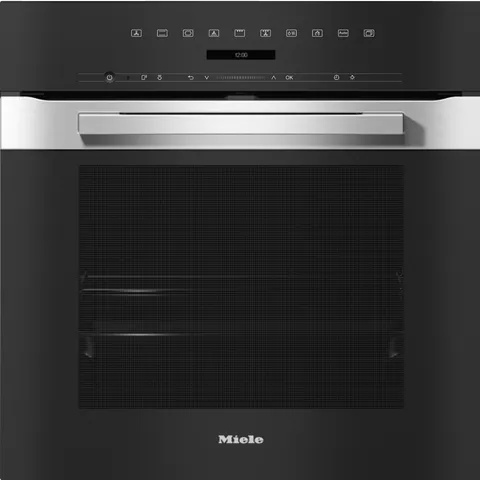
Miele
H 7264 BP
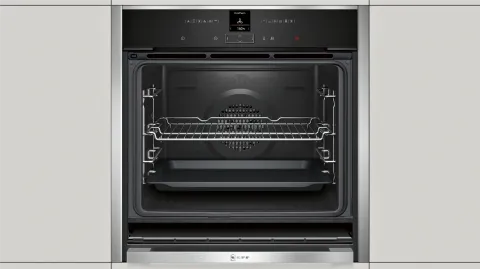
Neff
N70 B57CR22N0B
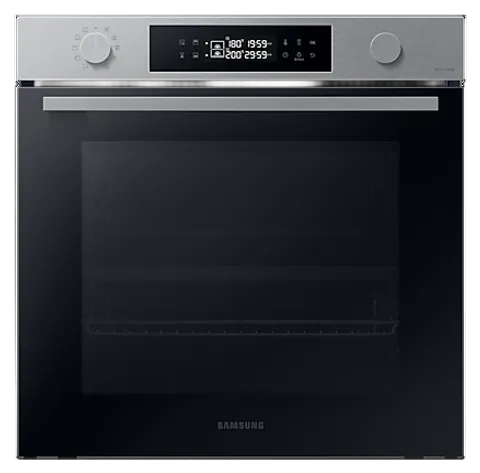
Samsung
Series 4 Dual Cook NV7B44205AS
Related categories
Frequently asked questions
Does a pricier single oven use less electricity per bake? +
Not measurably, based on our database. The Bosch Series 8 HBG7784B1 (1,349 EUR) and the Miele H 7264 BP CulinArt (1,999 EUR) sit 650 EUR apart, but among the four ovens in our set that publish an energy-per-cycle figure, the spread is only 0.02 kWh, from 0.69 kWh to 0.71 kWh. Price is not a useful proxy for oven running cost here.
What does the extra 650 euros between the Bosch and the Miele actually buy? +
Per our data, it buys 5 extra litres of cavity volume (76L vs 71L), Miele's added steam function, and brand-specific extras rather than a lower electricity bill. Both ovens use pyrolytic self-cleaning and offer 5 shelf levels; Miele does not publish a heating-function count to compare against Bosch's 14.
Why does Miele not publish an energy-per-cycle figure for this oven? +
It simply is not listed in the manufacturer data we track, and we never invent a number to fill the gap. It is worth noting because the Miele is the most expensive oven in this set and the only one of the five with no disclosed running-cost figure at all.
Does pyrolytic vs catalytic self-cleaning affect running cost? +
Pyrolytic cleaning, used by 4 of the 5 ovens here, burns off residue at very high heat and is generally the more thorough of the two methods; catalytic cleaning, used only by the Samsung Dual Cook in this set, relies on a coated liner and lower heat. A pyrolytic cycle does draw meaningfully more electricity than a normal bake, but manufacturers do not publish that draw as a separate figure in our dataset, so the 0.69 to 0.71 kWh bake-cycle numbers above do not include it.
Sources
More from the blog