The Dishwasher Eco Cycle Takes Five Hours. Here's Why.
Our database shows the most water- and energy-efficient dishwasher eco cycle also runs the longest, from 199 to 295 minutes. The trade-off is not a flaw.
By Nora Fischer · Last updated 19 July 2026
Researched and drafted with AI language-model assistance from CompareHomeAppliances' own verified spec database and cited public sources, per our AI-content disclosure.
The most water- and energy-efficient dishwasher eco cycle in our database is also the longest one. The Siemens iQ700 SN27TI02CE uses the least energy of any model that publishes a figure, 54 kWh per 100 cycles, and its eco program runs 295 minutes, just under five hours. The AEG 6000 SatelliteClean FSS64907Z, at 75 kWh per 100 cycles, the highest of the three models with energy data, finishes in 240 minutes. That is not a coincidence and it is not a flaw in the Siemens machine. It is how an EU ecodesign-compliant eco cycle is built to work.
Key takeaways:
- The Siemens iQ700 SN27TI02CE has the longest eco cycle at 295 minutes and, among the three models that publish an energy figure, the lowest use at 54 kWh per 100 cycles.
- The AEG 6000 SatelliteClean FSS64907Z uses the most energy of the three, 75 kWh per 100 cycles, on a shorter 240-minute cycle, a 21-kWh gap against the Siemens for 55 fewer minutes.
- Water use does not track duration as cleanly as energy does: the Miele G 5310 SC Active Plus uses the least water, 8.4 litres, on a 199-minute cycle, while the Beko DIN15310 uses the most, 11.5 litres, and publishes no cycle duration at all.
- Only 2 of the 5 dishwashers disclose a price, too thin to prove price predicts efficiency, but the pair we have fits the pattern: the Siemens at 1,399.99 EUR is the most expensive and most efficient, the AEG at 449.99 EUR is the cheapest and least efficient of the three with energy data.
- All five models are rated for 13 to 14 place settings, so capacity is not the variable behind the spread in cycle length, water, or energy.
Why does the most efficient cycle take five hours?
Look at the three dishwashers that publish an energy-per-100-cycles figure and the pattern sits at the extremes. The Siemens iQ700 SN27TI02CE uses the least energy, 54 kWh per 100 cycles, and runs the longest eco program, 295 minutes. The AEG 6000 SatelliteClean FSS64907Z uses the most energy, 75 kWh, on a shorter 240-minute cycle. The Bosch Series 6 SMV6ZCX10G sits between them on energy at 65 kWh, but runs the shortest cycle of the three at 215 minutes, so duration and energy do not line up in a perfectly straight line across all three. What holds cleanly is the pair that matters most for a buyer comparing extremes: the single most efficient program here is also the single longest one, and the single least efficient program is shorter.
This is a direct result of how EU ecodesign rules shape the eco cycle. Under Commission Regulation (EU) 2019/2022, dishwashers sold in the EU must include an eco programme that meets defined energy and water thresholds, and manufacturers meet those thresholds mainly by washing at a lower temperature for longer rather than washing hot and fast. Heating water is one of the largest single energy draws in a wash cycle. Slowing that heating and stretching the soak and wash phases lets the machine reach the same cleaning result on a lower peak energy load, at the cost of the clock. A 42 to 44-minute intensive program heats water hard and finishes quickly; an eco program spreads the same job across roughly four to five hours specifically so it does not have to.
| Model | Eco cycle (min) | Water/cycle (L) | Energy/100 cycles (kWh) | Noise (dB) | Price (EUR) | Place settings |
|---|---|---|---|---|---|---|
| Siemens iQ700 SN27TI02CE | 295 | 9.5 | 54 | 42 | 1,399.99 | 14 |
| AEG 6000 SatelliteClean FSS64907Z | 240 | 10.5 | 75 | 44 | 449.99 | 14 |
| Bosch Series 6 SMV6ZCX10G | 215 | 9.0 | 65 | 40 | N/A | 14 |
| Miele G 5310 SC Active Plus | 199 | 8.4 | N/A | 44 | N/A | 14 |
| Beko DIN15310 | N/A | 11.5 | N/A | 51 | N/A | 13 |
Does a longer eco cycle use more electricity overall?
No. This is worth saying plainly, because “five hours” sounds like it should cost more, not less. The Siemens’s 295-minute cycle uses less energy than the Bosch’s 215-minute cycle or the AEG’s 240-minute cycle, a 21-kWh gap against the AEG in the opposite direction from what the clock suggests. A slower, lower-temperature cycle does less total work per minute, not more, which is the mechanism Commission Delegated Regulation (EU) 2019/2017 relies on when it sets the energy-labelling thresholds the eco programme has to meet. A shopper comparing two specific models still needs to check the actual kWh figure, not assume the longer cycle always wins, since Bosch’s middling energy use on the shortest of the three cycles shows the relationship is not a straight line.
Does the eco cycle also save water?
Less predictably than it saves energy. Water use ranges from 8.4 litres on the Miele G 5310 SC Active Plus, which also has the shortest published eco cycle at 199 minutes, to 11.5 litres on the Beko DIN15310, which publishes no cycle duration at all. The Siemens iQ700 SN27TI02CE, with the longest cycle in the dataset, sits in the middle at 9.5 litres, not at either extreme. If a longer cycle reliably meant more water, the Siemens would use the most; it does not. Water use is driven more by wash-arm design, sensor-based load detection, and rinse-cycle count than by how long the heating and soak phases run, so treat duration as a reasonable proxy for energy behaviour and a poor one for water behaviour.
Does price predict which eco cycle is more efficient?
Only two of the five dishwashers disclose a price, too thin a sample to draw a real conclusion from. What we do have is consistent with the idea that efficiency costs both time and money, but consistent is not proof with only two data points. The Siemens iQ700 SN27TI02CE, at 1,399.99 EUR, is the most expensive model here, the most energy-efficient of the three with published energy figures, and has the longest eco cycle. The AEG 6000 SatelliteClean FSS64907Z, at 449.99 EUR, roughly a third of the Siemens’s price, is the least efficient of the three and has a shorter cycle. That is a clean story with n equals two. Treat it as a plausible trend worth watching as more models in the dishwashers category publish pricing, not as a rule to shop by.
Is the eco cycle worth using every time?
For a full load, yes, on the evidence here. The extra time buys a genuinely lower energy draw, not a marketing label, and none of the five machines differ enough in place settings (13 to 14 across the board) to explain the spread in cycle length, water, or energy on capacity alone. The trade-off is real: a 295-minute cycle needs to start early enough to finish before you need the dishes, and a household in a hurry has a legitimate reason to reach for a faster program some evenings. What the data does not support is skipping the eco cycle by default because a longer number on the display feels wasteful. Here, it is the opposite: the longest cycle is the cheapest one to run.
If you are choosing between two specific dishwashers, compare their full spec sheets side by side rather than going on cycle-length instinct alone, and once you have a real energy figure, whether from the eco cycle or the intensive one, run it through our running-cost tool with your own electricity price to see what the difference actually adds up to across a year of loads.
Appliances in this analysis
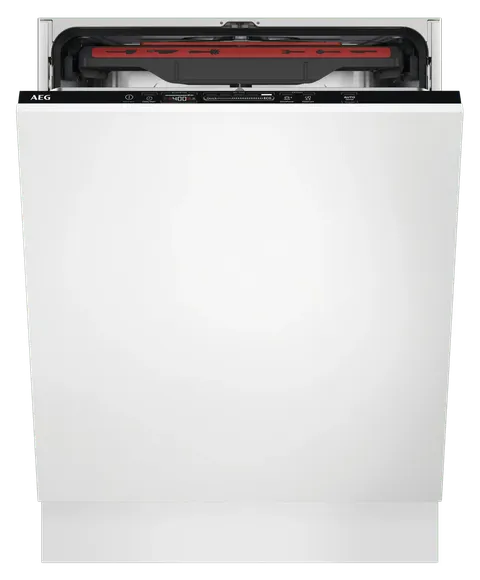
AEG
6000 SatelliteClean FSK64907Z
Beko
DIN24310
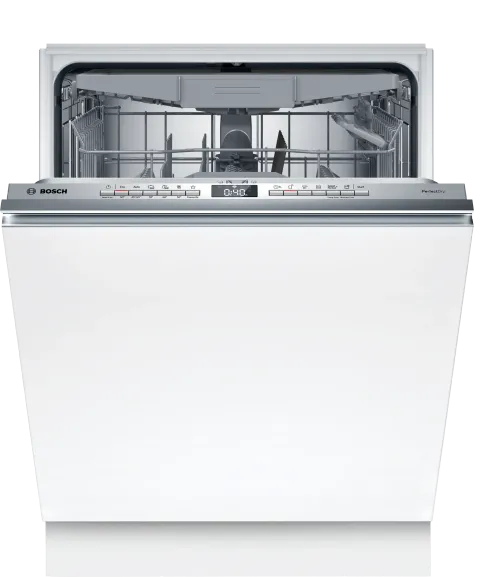
Bosch
Series 6 SMV6ZCX10E
Miele
G 5310 Active Plus
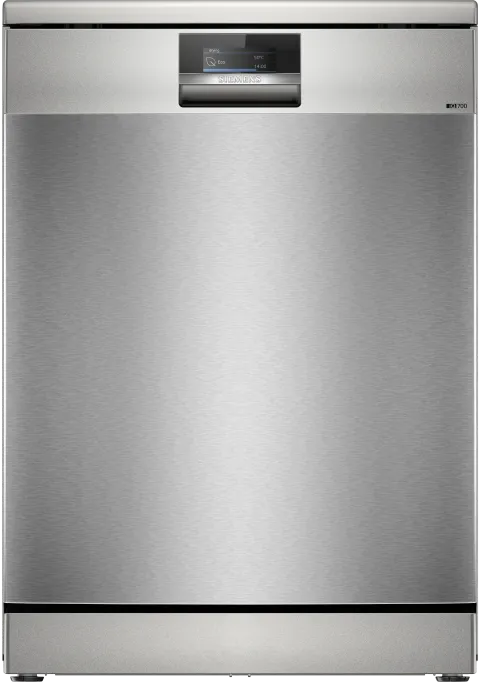
Siemens
iQ700 SN27TI02CE
Related categories
Frequently asked questions
Why does the dishwasher eco cycle take so much longer than a normal cycle? +
In our database, the eco program with the lowest energy use, the Siemens iQ700 SN27TI02CE at 54 kWh per 100 cycles, runs the longest at 295 minutes. EU ecodesign rules push eco programmes toward lower wash and rinse temperatures with longer soak and wash phases, because heating water slowly and washing at a lower temperature for longer draws less peak energy than a fast, hot cycle.
Does a longer eco cycle use more electricity overall? +
No, not in this dataset. The Siemens iQ700 SN27TI02CE runs the longest eco cycle at 295 minutes and uses the least energy of the three models with published figures, 54 kWh per 100 cycles, versus 65 kWh for the Bosch Series 6 SMV6ZCX10G's 215-minute cycle and 75 kWh for the AEG 6000 SatelliteClean FSS64907Z's 240-minute cycle.
Is skipping the eco cycle to save time worth the energy cost? +
Usually not, if the appliance is going to run a full load either way. The point of the eco cycle's extra time is to lower the temperature and stretch the wash, which is what cuts the energy draw; a faster intensive cycle heats water harder and finishes sooner at a higher energy cost per load. Run the two cycle types through our running-cost tool with your own electricity price to see the annual euro difference before deciding it isn't worth the wait.
Sources
More from the blog