Two Fridges, Same Size, 57 Percent More Freezer Space
Total litres alone can mislead. In our database, freezer space ranges from 24 to 38 percent of total volume among fridge-freezers of similar overall size.
By Nora Fischer · Last updated 19 July 2026
Researched and drafted with AI language-model assistance from CompareHomeAppliances' own verified spec database and cited public sources, per our AI-content disclosure.
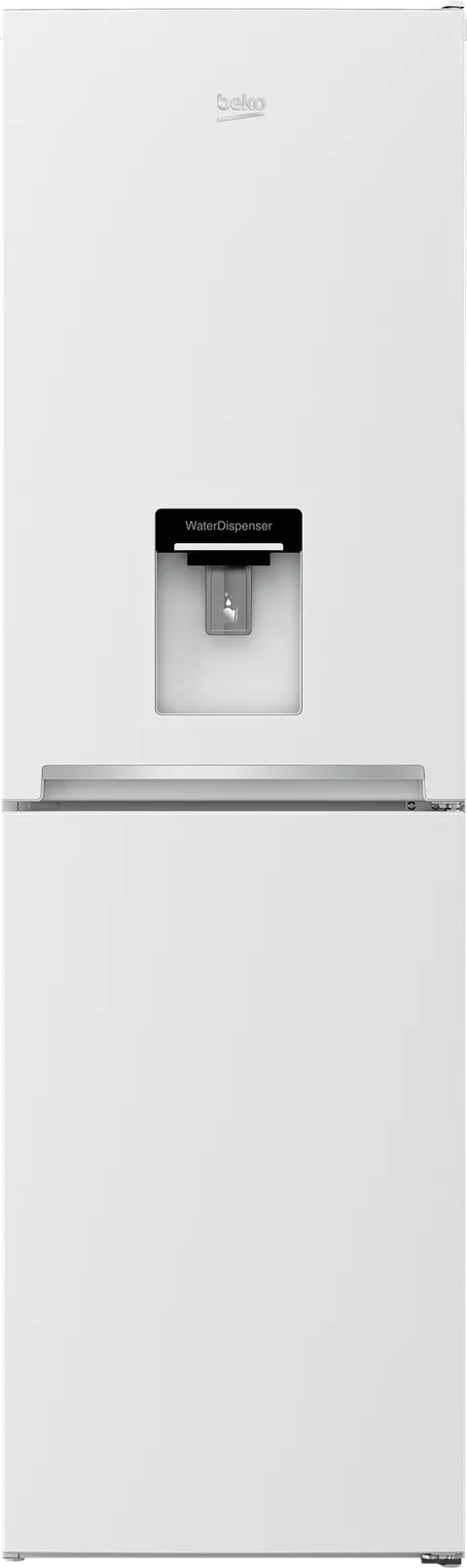
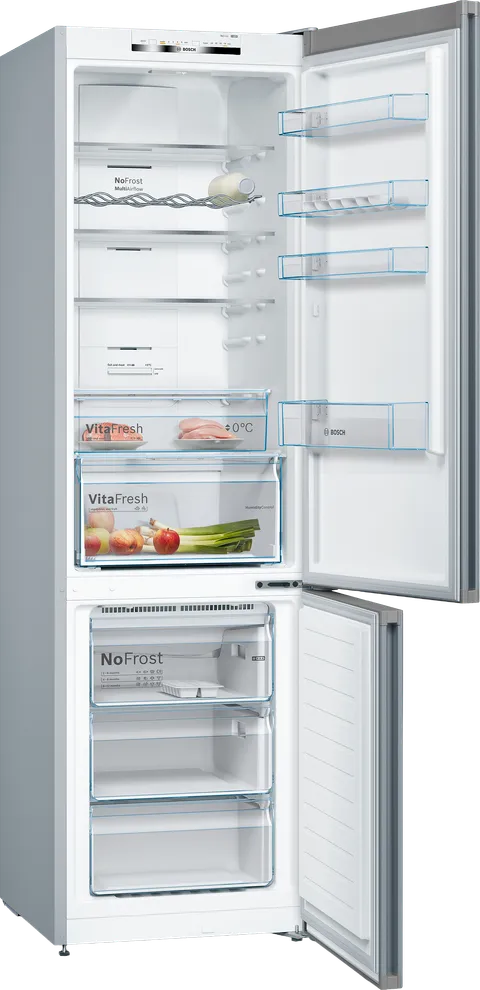
The Beko CFG4582DW is the smallest fridge-freezer in our database at 268 litres total, yet it puts 38.1 percent of that volume into the freezer, the highest freezer share of any model we checked. The Bosch KGN39VLEAG holds 368 litres, 37 percent more total volume than the Beko, but its freezer share is only 24.2 percent, the lowest in the set. Run the litres instead of the percentage and the gap gets more concrete: Bosch’s freezer holds 89L, Beko’s holds 102L. The larger fridge has the smaller freezer.
Key takeaways:
- Freezer share of total volume ranges from 24.2% (Bosch KGN39VLEAG) to 38.1% (Beko CFG4582DW) across the five fridge-freezers in our database, a spread of 57% relative to the lowest figure.
- The smallest total volume in the set, the 268L Beko CFG4582DW, has the highest freezer share (38.1%); the second-largest, the 368L Bosch KGN39VLEAG, has the lowest (24.2%).
- Bosch’s total volume is 37% larger than Beko’s, yet its freezer holds fewer litres in absolute terms, 89L against Beko’s 102L.
- The LG GBB92STAXP has the largest total volume of the five (384L) but only the second-lowest freezer share (27.9%), so the biggest fridge in a lineup is not automatically the one with the biggest freezer.
- Noise levels across the five (34 to 39 dB) and energy class where disclosed (D or E) sit in a tight, unremarkable range and do not explain the freezer-share gap; the split is a design decision, not a side effect of size or efficiency.
Why does the smallest fridge have the most freezer space?
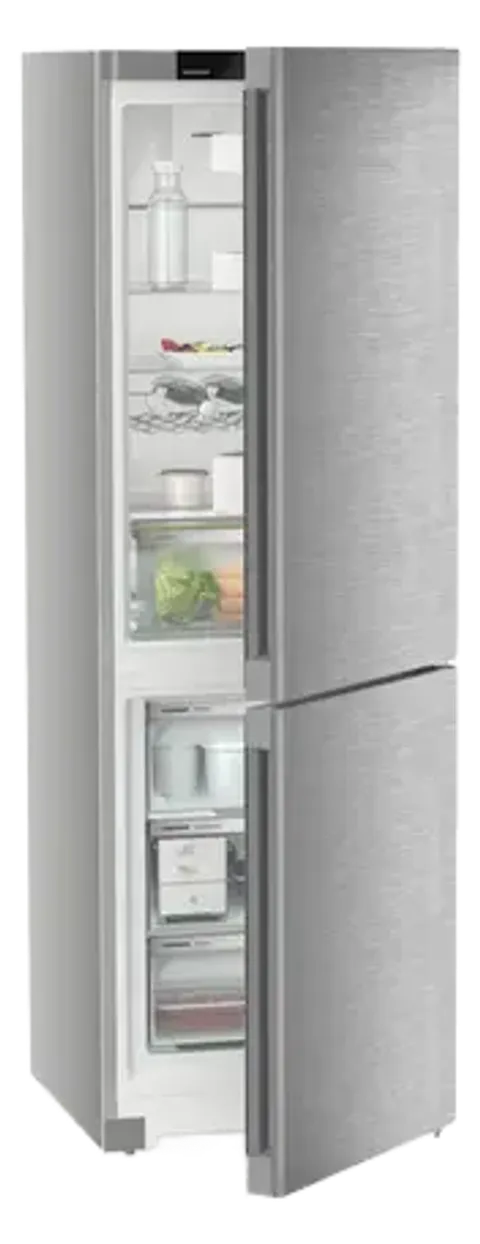
The Beko CFG4582DW is the outlier worth leading with. At 268 litres total, it is the smallest fridge-freezer in our five-model comparison by a wide margin, the next smallest, the Liebherr CNsdb 5223, is 330 litres. And yet the Beko’s freezer compartment takes up 38.1 percent of that smaller cabinet, more than any other model here. In absolute terms that is 102 litres of freezer space out of 268 litres total, with 166 litres left for the fridge side.
That is a genuinely counter-intuitive result if you shop by total capacity alone. A shopper scanning listings for “biggest fridge” would likely skip past the Beko in favour of something with a larger number on the box, and in doing so would walk past the model that actually gives them the most freezer litres per litre of kitchen footprint. Compact does not mean freezer-light here, it is the opposite.
Does a bigger total volume guarantee a bigger freezer?
No, and the Bosch KGN39VLEAG is the clearest evidence. It holds 368 litres total, second only to the LG in this set, but only 24.2 percent of that volume is freezer, 89 litres. Set that next to the Beko: Bosch’s total cabinet is 37 percent bigger, yet its freezer is smaller by 13 litres. Buying the fridge with the bigger overall number does not buy you a bigger freezer, in this case it buys you the opposite.
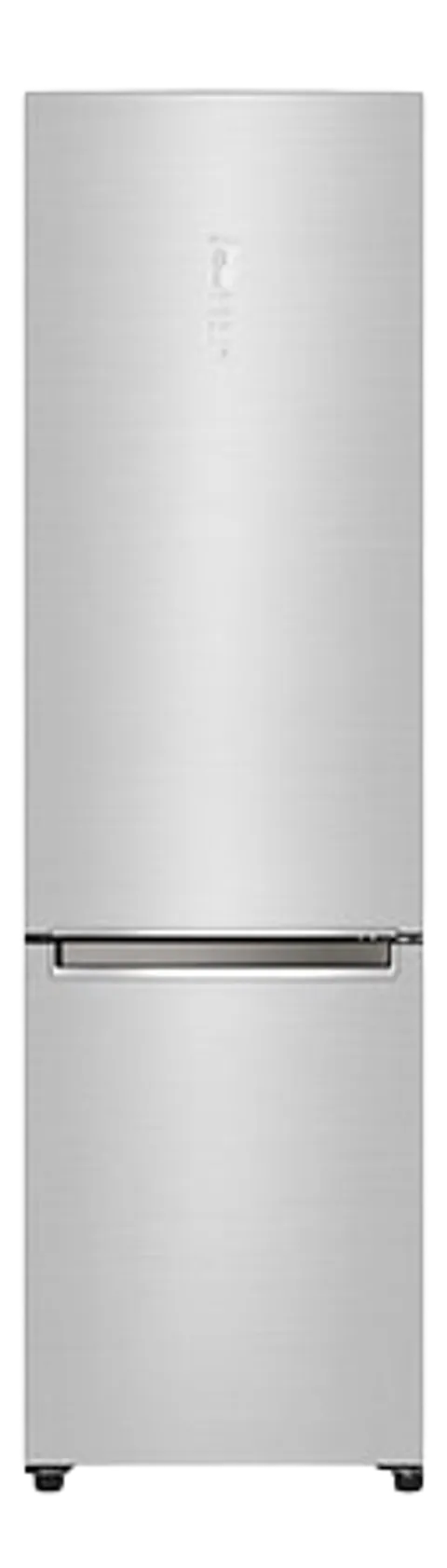
The LG GBB92STAXP reinforces the same point from a different angle. It is the largest fridge-freezer in our set at 384 litres, the most fridge and freezer space combined by a clear margin, but its freezer share is 27.9 percent, the second-lowest of the five. A shopper who assumes “the biggest fridge has the biggest freezer” would be wrong twice over in this data set: once with Bosch, again with LG.
| Model | Total volume (L) | Fridge (L) | Freezer (L) | Freezer share | Energy class | Noise (dB) |
|---|---|---|---|---|---|---|
| Beko CFG4582DW | 268 | 166.0 | 102 | 38.1% | E | 37 |
| Liebherr CNsdb 5223 | 330 | 227.1 | 103 | 31.2% | N/A | 34 |
| Samsung RB34T672DSA | 344 | 230 | 114 | 33.1% | D | 35 |
| Bosch KGN39VLEAG | 368 | 279 | 89 | 24.2% | E | 39 |
| LG GBB92STAXP | 384 | 277 | 107 | 27.9% | D | 36 |
Read down the “Total volume” column and the fridges line up neatly from smallest to largest. Read down “Freezer share” and there is no such order: it climbs, drops, climbs again, with no relationship to the size sitting next to it. That is the entire finding in one table. Total volume and freezer share are two separate numbers, and only one of them is usually printed in bold on a listing page.
How do you check the split before buying?
The fix is simple once you know to look for it: read the fridge litres and the freezer litres separately, not just the combined total, and calculate the share yourself if the listing does not state it. A 5-point gap in freezer share sounds small until you multiply it across a real cabinet: on a roughly 350-litre fridge, moving from a 24 percent freezer share to a 33 percent one is the difference between about 84 litres and about 116 litres of frozen storage, enough for several extra weeks of batch-cooked meals or a larger cut of meat.
Who should care most about this gap?
Total volume matters for anyone weighing fresh food storage, groceries, produce, dairy, everyday cooking. Freezer share matters more specifically to a narrower but real group: households that freeze in bulk. Meal-preppers batching a week or a month of dinners, families buying meat in bulk to save on the per-kilo price, gardeners freezing a harvest, anyone stocking a chest-freezer’s worth of food into a kitchen fridge because they do not have room for a second appliance. For that shopper, a 268-litre fridge with a 38.1 percent freezer share can out-freeze a 368-litre fridge with a 24.2 percent share, even though the second one looks like the bigger buy on paper.
For everyone else, mostly fresh-food-first households, total volume and the fridge-side litres still matter more than freezer share, and a lower freezer percentage on a large cabinet is not a flaw, it is simply a different design priority.
The honest conclusion is that total net volume alone is not a reliable way to compare fridges, not in this data set. Two models advertised at similar overall size can differ by more than half in actual freezer litres, and that gap is invisible until you look past the headline number. Before deciding between two candidates, check both litre figures, not just the sum, in the full refrigerators category, and put your shortlist side by side in the compare tool so the fridge-to-freezer split sits right next to the total, not buried under it.
Appliances in this analysis
Beko
CFG4582DW
Bosch
Series 4 KGN39VLEAG
LG
GBB92STAXP
Liebherr
CNsdb 5223 Plus
Related categories
Frequently asked questions
Why can two fridges with similar total volume have very different freezer space? +
Because manufacturers split the same overall cabinet differently. In our database, freezer share ranges from 24.2% of total volume (Bosch KGN39VLEAG) to 38.1% (Beko CFG4582DW), so the internal split, not the total litres printed on the box, decides how much freezer space you actually get.
Who should prioritize a high freezer share over total capacity? +
Anyone who freezes food in bulk: meal-preppers, families buying meat or bread in bulk, or households that grow or preserve garden produce. For those shoppers, a smaller fridge with a higher freezer share, like the 268-litre Beko CFG4582DW at 38.1%, can hold more frozen food than a larger fridge with a lower share.
Is total net volume a reliable way to compare fridges? +
Not on its own. Our data shows total volume and freezer share do not move together: the largest fridge in our set (384L) has only the second-lowest freezer share, and the smallest (268L) has the highest. Always check the fridge/freezer litre split before comparing two models by total volume alone.
Sources
More from the blog