A Hob With a Built-In Extractor Costs 636 Euros More
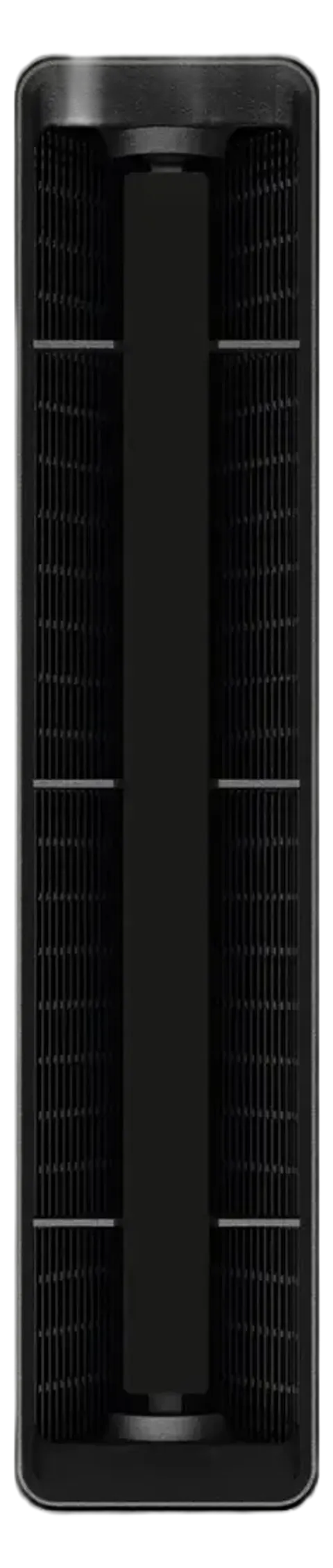
The only hob with a built-in extractor in our database costs 2,799 EUR. A separate induction hob plus an extractor hood matches its job for 2,163 EUR or less.
By Nora Fischer · Last updated 5 September 2026
Researched and drafted with AI language-model assistance from CompareHomeAppliances' own verified spec database and cited public sources, per our AI-content disclosure.
If your kitchen island has nowhere to hang a hood, a hob with a built-in extractor looks like the obvious answer, and it will cost you. The one priced example in our database, the Bosch Serie 6 PVQ811H26E, is 2,799 EUR. A separate induction hob plus a mid-range extractor hood that matches its zones and power comes to 2,163 EUR, and the cheapest working combination we have on file comes to just 808 EUR. That is a 636 EUR premium at the median and a 1,991 EUR premium against the floor, for folding two appliances into one.
Key takeaways:
- The only priced hob with a built-in extractor in our database, the Bosch Serie 6 PVQ811H26E, costs 2,799 EUR: 4 zones, induction, 7,400W total power.
- A spec-matched separate setup (a 4-zone, 7,400W induction hob at the median priced group value, 1,259 EUR, plus a mid-range extractor hood at the median of 14 priced hoods, 904 EUR) totals 2,163 EUR, a 636 EUR gap, 29.4 percent more for the built-in unit.
- Against the cheapest possible separate setup in our data, 569 EUR hob plus 239 EUR hood, 808 EUR total, the built-in-extractor hob costs 1,991 EUR more, 246.4 percent more.
- There is currently no budget-tier built-in-extractor hob in our database. Two more exist, both Bosch, both induction and 4-zone at 7,400W, but neither publishes a price.
- Our record for the built-in-extractor hob has no extraction-rate figure the way every standalone hood record does, so this comparison covers price and appliance count only, not verified airflow.
What does a hob with a built-in extractor actually replace?
A hob with a built-in extractor is an induction cooktop with a downdraft vent built into the surface itself. Instead of steam and cooking odours rising to an overhead hood, the vent pulls them down through the cooktop and out through ducting under the counter. The job it does is identical to a normal hob plus a hood mounted above or beside it: cook on induction zones, remove the steam. The difference is packaging. One appliance does both jobs, which matters most in a specific layout, a kitchen island or peninsula with no wall or ceiling run nearby to hang a hood from.
The Bosch Serie 6 PVQ811H26E is the only one of these in our database with a published price. It has 4 induction zones, 7,400W of total power, and a maximum single-zone output of 3,700W, spec figures that line up closely with several ordinary induction hobs in our catalogue. Two more built-in-extractor models exist in the data, the Bosch PVQ711H26E and the Bosch PVS831B16E, both also 4-zone, 7,400W induction. Neither publishes a price, so they cannot enter a cost comparison, but their existence shows this is a small, growing category rather than a one-off.
Is the built-in extractor actually cheaper than buying two appliances?
No, not in our data, and not by a small margin. To answer this fairly, we matched the built-in-extractor hob against a separate hob with the same zone count and power rating, then added a hood.
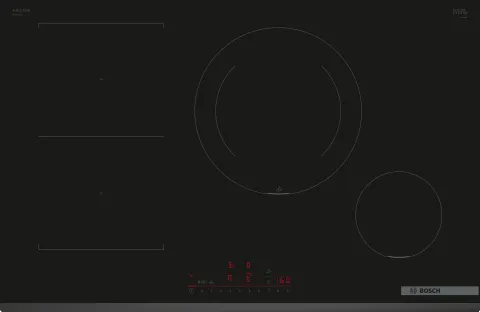
Five priced Bosch induction hobs in our database share the built-in unit’s exact specification, 4 zones and 7,400W, with no built-in extraction: 569, 1,249, 1,259, 1,449 and 1,649 EUR. The median of that group is 1,259 EUR, close to the Bosch PVS831HC1E. Across all 14 priced Bosch extractor hoods in our database, prices run from 239 to 1,659 EUR, with a median of 904 EUR, close to the Bosch DBB97DP60, which also publishes a real extraction rate of 433 cubic metres per hour and a maximum noise of 68dB.
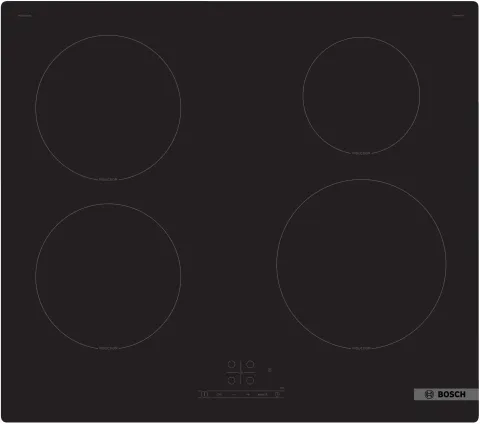
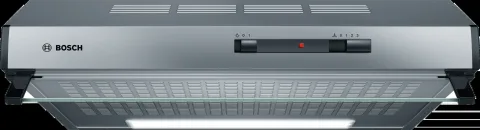
Add the median hob to the median hood and you get 2,163 EUR, a spec-matched separate setup for 636 EUR less than the built-in unit. Go further and pick the cheapest hob and cheapest hood that would still function together, the Bosch PIE61RBB5E at 569 EUR and the Bosch DUL62FA51 at 239 EUR, and the total drops to 808 EUR, a gap of 1,991 EUR against the built-in unit.
| Setup | Spec | Price (EUR) |
|---|---|---|
| Only built-in-extractor hob (Bosch PVQ811H26E) | 4 zones, induction, 7,400W | 2,799 |
| Median-spec separate combo | 4 zones, 7,400W hob + mid-range hood | 2,163 |
| Cheapest separate combo | Bosch PIE61RBB5E + Bosch DUL62FA51 | 808 |
That 1,991 EUR gap against the cheapest combo is roughly what a mid-range dishwasher and a mid-range oven would cost together in our catalogue. It is worth sitting with that comparison before signing off on the built-in unit purely for convenience.
Why does one carry an energy label and the other does not?
Neither the built-in-extractor hob nor any ordinary hob carries an EU A-to-G energy label. The European Commission’s own hobs product-list page states plainly that hobs are exempt from the energy-labelling requirement entirely. Extractor hoods sit on the opposite side of that rule: since January 2015, range hoods have needed a mandatory A+++-to-G label covering four sub-ratings, fluid dynamic efficiency, lighting efficiency, grease-filtering efficiency and noise. You can read the full breakdown in our guide to the EU energy label.
Our record for the Bosch PVQ811H26E has no energyClass field populated at all, which is consistent with the hob-side exemption, cooking is not labelled regardless of how the hob is built. What the rule does not settle is the extraction side of a downdraft hob. A built-in extractor is doing the same physical job as a labelled hood, moving air out of the kitchen, but none of our sources address whether that function needs a hood-style label of its own when it is embedded in a cooktop rather than sold as a standalone hood. We are flagging that as an open question, not answering it either way.
What can this comparison not tell you?
Three honest limits, stated plainly rather than buried in a footnote. First, our built-in-extractor hob record has no extraction-rate figure in cubic metres per hour, the number every one of our standalone hood records publishes. We cannot verify that the downdraft vent moves as much air as a comparable separate hood, so this piece compares price and appliance count, not measured airflow performance. Second, ducting and installation costs, which can differ meaningfully between an overhead hood and an under-counter downdraft run, are not part of our appliance-price figures and are not estimated anywhere in this post. Third, there is exactly one priced built-in-extractor hob in our database. A single data point tells you what that one model costs, not what the category costs on average, and a second or third priced model could shift this comparison in either direction.
So which setup should you actually buy?
If your layout has a wall or ceiling run available for a hood, or if budget matters more than counter-space aesthetics, buy separately. It is cheaper at every tier we found, from 808 EUR up, it gives you far more choice on both the hob and the hood side, including the 14 hood options and 5 matched hobs we compared here, and it lets you replace either half independently when it wears out rather than swapping a single fused unit. The built-in-extractor hob earns its 636 to 1,991 EUR premium in exactly one situation: a kitchen island or peninsula with genuinely nowhere to mount a hood. Outside that constraint, the premium buys convenience you are not short on options to get more cheaply.
Compare the specific models named here, or browse the full range, on the hobs category page and the extractor hoods category page, or line up any two setups side by side in the comparison tool.
Appliances in this analysis
Bosch
Serie 6 PVQ811H26E
Bosch
Serie 4 PIE61RBB5E
Bosch
Serie 6 PVS831HC1E
Bosch
Serie 2 DUL62FA51
Bosch
Serie 6 DBB97DP60
Related categories
Frequently asked questions
What is a hob with a built-in extractor? +
It is an induction hob with a downdraft vent built into the cooktop itself, pulling cooking steam and odours down and away instead of relying on an overhead or wall-mounted extractor hood.
Is a built-in extractor hob worth the extra cost? +
In our database, the one priced example costs 636 EUR more than a comparable separate induction hob plus a mid-range extractor hood, and up to 1,991 EUR more than the cheapest separate combination we have on file. The premium buys one appliance instead of two and frees up the space a hood would otherwise occupy, which matters most over a kitchen island with nowhere to mount one.
Do I still need a separate extractor hood if I buy a hob with a built-in extractor? +
No. A hob with a built-in extractor is designed to replace the overhead or wall-mounted hood entirely. Installing both would be redundant.
Why does a hob carry no EU energy label while an extractor hood does? +
EU ecodesign rules exempt hobs from the A-G energy label entirely, but require one for range hoods, covering fluid dynamics, lighting, grease filtering and noise. The one built-in-extractor hob in our database has no energy class on file either, consistent with the hob-side exemption. Whether its extraction side needs a hood-style label of its own is not addressed by any source we have, and we are not asserting an answer either way.
Sources
- Bosch Serie 6 PVQ811H26E product page
- Bosch PIE61RBB5E induction hob product page
- Bosch PVS831HC1E induction hob product page
- Bosch DUL62FA51 extractor hood product page
- Bosch DBB97DP60 extractor hood product page
- European Commission - Hobs product list (no energy label required)
- European Commission - Range hoods product list (mandatory energy label)
More from the blog