Microwave: The Grill Model Costs Less Than Basic
A grill microwave in our database has more power levels, bigger capacity, and a grill function, yet costs 13 EUR less than a basic solo model.
By Nora Fischer · Last updated 9 September 2026
Researched and drafted with AI language-model assistance from CompareHomeAppliances' own verified spec database and cited public sources, per our AI-content disclosure.
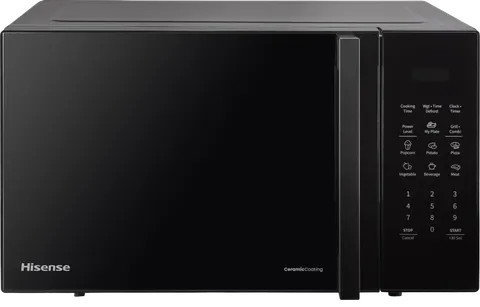
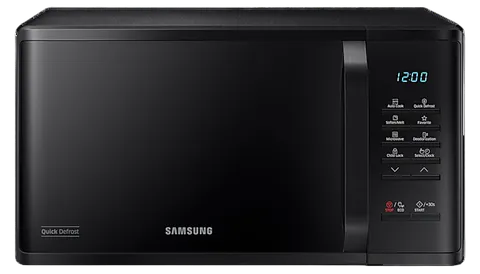
If you assume a microwave with a grill costs more than a plain solo model, check the Hisense H29MOBS9HG before you pay that assumption forward. It has a 1000W grill on top of its 900W microwave, 29 litres of capacity, 11 power levels, and 7 auto programs, and it costs 114.99 EUR. The Samsung MS23K3513AK, a basic 800W solo model with no grill, only 23 litres, only 6 power levels, and no auto programs at all, costs 127.90 EUR. The grill model is 12.91 EUR cheaper, a 10.1 percent gap, while beating the basic model on every single spec that was measured.
Key takeaways:
- The Hisense H29MOBS9HG (grill, 900W/1000W, 29 L, 11 power levels, 7 auto programs) costs 114.99 EUR, 12.91 EUR (10.1 percent) less than the Samsung MS23K3513AK (solo, 800W, 23 L, 6 power levels, no auto programs) at 127.90 EUR, despite winning on every measured spec.
- Across the four microwaves in our database with a disclosed price, EUR per litre of capacity ranges from 3.97 (Hisense) to 16.05 (Bosch Serie 4 BFL523MS0), a 4.05 times spread.
- The Bosch is also the only built-in-installation model in this dataset, the other four are countertop or freestanding, matching a built-in premium already found twice before on this site, in refrigerators and wine coolers.
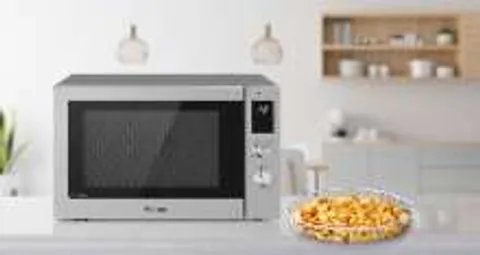
- The priciest model overall, the Panasonic NN-CD88 at 469.99 EUR, is also the most capable: 34 L capacity, 1300W grill, 27 auto programs and an inverter, a price that tracks real feature differences rather than an unexplained gap.
- Microwaves carry no EU A-to-G energy label at all, the same gap already documented on this site for blenders, coffee machines, irons and toasters.
Does a grill function always cost more than a basic one?
Not here. The Hisense and Samsung are the clearest possible test case: one is a grill microwave, one is the plainest solo type in the category, and the grill model is the cheaper of the two. Line up the disclosed specs and there is no axis on which the Samsung wins. The Hisense holds 6 more litres of capacity, nearly a quarter more room. It offers 11 power levels against the Samsung’s 6, almost double the control over how hard the microwave runs. It has 7 auto programs; the Samsung has none listed. It adds a 1000W grill the Samsung simply does not have. Both list a child lock, so that is a wash. On price, capacity, control, programs and grill function combined, the Samsung loses on every count and still costs more.
That is the finding worth sitting with before you shop by type. “Grill” and “combi” sound like upsells, and often they are, the Panasonic below is a genuine example of paying more for more. But type is not a reliable proxy for price on its own. The only way to know which model is actually the better buy is to read the spec sheet next to the price tag, not to assume a plainer-sounding machine is the cheaper one.
| Slug | Model | Type | Price (EUR) | Capacity (L) | EUR/L | Power (W) | Grill (W) | Power levels | Auto programs | Child lock |
|---|---|---|---|---|---|---|---|---|---|---|
| hisense-h29mobs9hguk | Hisense H29MOBS9HG | Grill | 114.99 | 29 | 3.97 | 900 | 1000 | 11 | 7 | Yes |
| samsung-ms23k3513ak | Samsung MS23K3513AK | Solo | 127.90 | 23 | 5.56 | 800 | - | 6 | N/A | Yes |
| panasonic-nn-cd88qsbpq | Panasonic NN-CD88 4-in-1 | Combi | 469.99 | 34 | 13.82 | 1000 | 1300 | 7 | 27 | Yes |
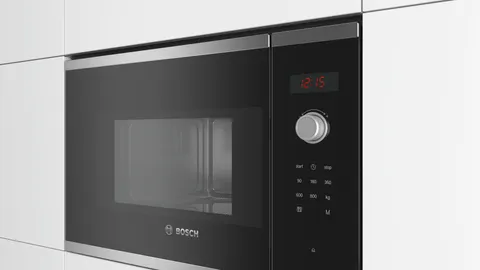
| bosch-serie-4-bfl523ms0b | Bosch Serie 4 BFL523MS0 | Built-in | 321.07 | 20 | 16.05 | 800 | - | 5 | 7 | N/A |
| toshiba-ml3-em45pfi-mb | Toshiba ML3-EM45PFI(MB) | Solo | N/A | 45 | N/A | 1200 | - | N/A | 20 | N/A |
Note: the Toshiba ML3-EM45PFI(MB) carries no disclosed price and is excluded from every EUR-based comparison in this post. It is shown here because it has the largest capacity of any microwave in the database, 45 litres, alongside 1200W of power and 20 auto programs.
Why is EUR per litre so different across the category?
Among the four models with a price on file, cost per litre of capacity swings from 3.97 EUR on the Hisense up to 16.05 EUR on the Bosch, a 4.05 times spread inside one small category. That is a wider range than the raw sticker prices suggest, because it strips out the effect of size and asks the more useful question: how much are you paying for each litre of room inside the cavity.
The Hisense sits at one end as the standout, the cheapest room you can buy in this category on a per-litre basis, and it still carries a grill the Samsung lacks. The Bosch sits at the other end, and that is not a coincidence of one bad listing, it lines up with something the type column already tells you.
Why is the built-in Bosch the most expensive per litre?
Look at the type column again and the Bosch stands apart in more than price: it is the only built-in-installation microwave in this dataset. The Bosch Serie 4 BFL523MS0 is fitted into cabinetry; the Hisense, Samsung, Panasonic and Toshiba are all countertop or freestanding units you place and plug in. Built-in costs more to engineer, matching hinges, trim kits, and a chassis sized to a standard cabinet cutout, and that cost shows up here the same way it has shown up twice already on this site: in refrigerators, where built-in models ran roughly 4.79 EUR per litre against about 2.33 EUR per litre freestanding across 66 units, and in wine coolers, where a built-in Bosch cost 490 EUR, 33.6 percent, more than an otherwise near-identical freestanding sibling.
This is the third time that pattern has turned up independently, in three different appliance categories, which is worth flagging as a real recurring signal rather than a fluke. Being honest about the evidence here matters, though: this microwave category has exactly one built-in model, so this is a single data point consistent with the built-in premium, not proof of it on its own. If you are choosing between a built-in and a countertop microwave, treat the extra euros per litre as a real, repeatedly observed cost of the built-in form factor, not as something this one Bosch listing happens to be doing.
Is the priciest microwave actually overpriced?
Not on this evidence. The Panasonic NN-CD88 is the most expensive microwave in the dataset at 469.99 EUR, and it is also the most capable by a wide margin: 34 litres of capacity, the largest of any priced model, a 1300W grill on top of 1000W of microwave power, 27 auto programs against 7 or fewer everywhere else, and an inverter, a feature none of the other four models list. Its EUR-per-litre figure, 13.82, is high, but it is high because the machine underneath it is doing more, not because the price has come loose from the spec sheet.
That is the contrast worth carrying out of this post. The Bosch and Hisense show a price gap with no capability behind it, a smaller, less capable, built-in Bosch costing more per litre than a bigger, better-equipped Hisense. The Panasonic shows the opposite: a real capability jump behind a real price jump. Both are priced high relative to the Hisense, but only one of them is explained by what you actually get. The only way to tell which is which, in any category, is to press past the sticker and check the spec sheet, the same discipline this dataset rewards every time.
Does the EU energy label apply to microwaves?
No, and this is consistent with a pattern already documented on this site rather than a new finding. Checked directly against the European Commission’s own Ecodesign and energy-label product list, microwaves do not appear anywhere on it. There is no A-to-G rating to compare, the same gap already established here for blenders, coffee machines, irons and toasters. Our guide to reading the EU energy label explains which categories the label does cover; a microwave shopper simply will not find one to check, so price, capacity, and the disclosed spec sheet are the real evidence available.
Compare the current lineup for yourself at /microwaves/ before deciding whether a grill function, a built-in fit, or an inverter is worth paying for in the model you actually need.
Appliances in this analysis
Hisense
H29MOBS9HG
Samsung
MS23K3513AK/EG
Panasonic
NN-CD88 4-in-1 (QSEPG)
Bosch
Serie 4 BFL523MS0
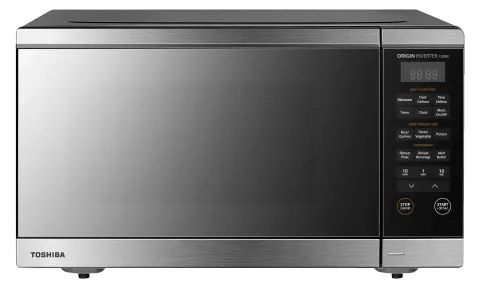
Toshiba
ML3-EM45PFI(MB)
Related categories
Frequently asked questions
Does the EU energy label apply to microwaves? +
No. Checked directly against the European Commission's own Ecodesign/energy-label product list, microwaves have no entry there at all, the same situation already established on this site for blenders, coffee machines, irons and toasters. There is no A-to-G rating to look for on a microwave.
Does a grill or combi microwave always cost more than a basic solo one? +
Not in this dataset. The grill Hisense H29MOBS9HG costs less than the solo Samsung MS23K3513AK despite beating it on every measured spec, capacity, power levels, and auto programs included. Check the actual price and spec sheet rather than assuming the type predicts the price.
Why is the built-in Bosch the most expensive per litre? +
It is the only built-in-installation model in this small dataset, the other four are countertop or freestanding, and built-in has already cost more per litre twice before on this site, in refrigerators and wine coolers. That makes this one more data point consistent with the pattern, not proof on its own.
Is the most expensive microwave, the Panasonic, overpriced? +
Not obviously. It has the largest priced capacity, by far the most auto programs, and a combi grill-plus-microwave function with an inverter, real capability differences that plausibly explain a chunk of the gap, unlike the Bosch-versus-Hisense pair, where the price gap has no such explanation.
Sources
More from the blog