Same Eco Cycle, Different Energy Class
Two Bosch dishwashers share the identical 295-minute eco cycle, yet one burns 37 percent more energy per 100 cycles. A longer wait alone buys nothing.
By Nora Fischer · Last updated 25 August 2026
Researched and drafted with AI language-model assistance from CompareHomeAppliances' own verified spec database and cited public sources, per our AI-content disclosure.
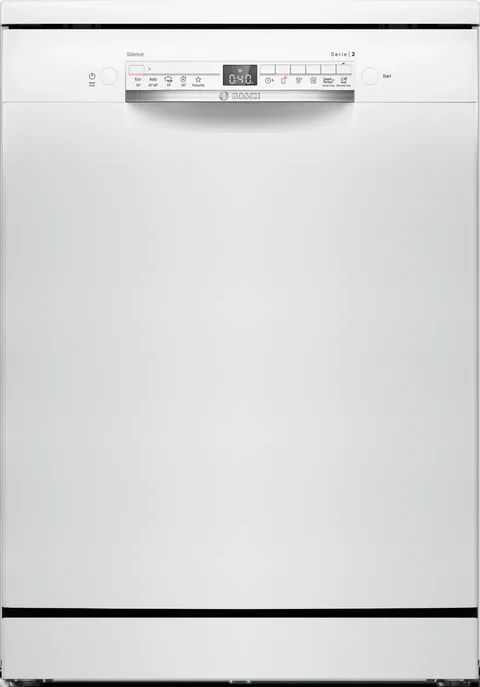
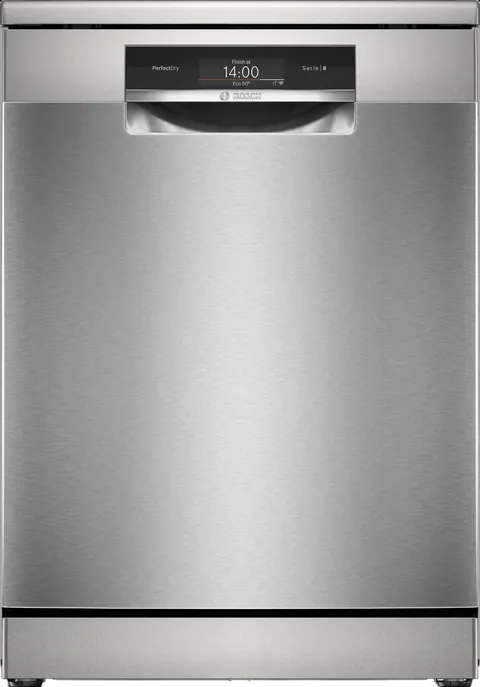
If you assume a dishwasher’s eco cycle length tells you something about how efficient it is, the Bosch Serie 2 SMS2HTW08E and the Bosch Serie 8 SMS8TCI04E break that assumption outright. Both run the identical 295-minute eco cycle, both are freestanding, 60cm machines. The Serie 2 lands in energy class C at 74 kWh per 100 cycles. The Serie 8 lands in class A at 54 kWh, 37 percent less energy, for the same nearly-five-hour wait. The extra time buys nothing. The extra 540 EUR buys the better energy class.
Key takeaways:
- The Bosch Serie 2 SMS2HTW08E (599 EUR, class C, 74 kWh/100 cycles) and Bosch Serie 8 SMS8TCI04E (1,139 EUR, class A, 54 kWh/100 cycles) both run the exact same 295-minute eco cycle; the Serie 2 uses 37.0 percent more energy for an identical wait.
- The 540 EUR price gap (90.2 percent more for the Serie 8) works out to about 20.80 EUR a year in extra electricity for the cheaper machine, a roughly 26-year payback on the premium, longer than a dishwasher’s realistic working life.
- Eight dishwashers in this catalog share the exact 295-minute eco cycle; six reach class A at 54 kWh and only two, both Bosch Serie 2 units, sit at class C and 74 kWh.
- Across all 38 dishwashers publishing both figures, eco-cycle length and energy use correlate at only -0.41, a moderate tendency, not a rule a shopper can trust.
- The shortest eco cycle in the catalog, 195 minutes, still reaches class C at 59 kWh, nearly matching a 240-minute cycle’s class C at 75 kWh; a short wait is not automatically the worse machine.
What does the identical 295-minute wait actually buy you?
Nothing, on its own. The Serie 2 and the Serie 8 are matched on install type (both freestanding), width (both 60cm) and eco-cycle duration (both 295 minutes), so the only real variables left are price, capacity and the energy label. The Serie 8 holds one more place setting (14 against 13), runs 4 dB quieter (42 dB against 46 dB), and uses 54 kWh per 100 cycles against the Serie 2’s 74 kWh, a 20 kWh gap. None of that shows up as a shorter wash. Both machines finish the eco cycle at the same clock time.
Run the 20 kWh gap through CompareHomeAppliances’ own reference assumptions (0.40 EUR per kWh, 260 cycles a year, the same numbers used in the running-cost tool and in our earlier piece on two decibels costing 210 euros) and it comes to 52 kWh a year, 20.80 EUR. The Serie 8 costs 540 EUR more to buy. Divide one by the other and the electricity savings alone take about 26 years to earn back the premium, well past what a dishwasher will realistically live to see. That does not mean the Serie 8 is a bad buy. It means the case for it has to rest on the quieter operation, the extra place setting, or simply wanting the better energy label, not on a payback that never really arrives. Plug your own tariff and cycle count into the running-cost tool if your household runs the dishwasher more or less than five times a week; the 26-year figure moves with your own numbers, but not by enough to change the conclusion.
Is this pattern a one-off, or does it repeat?
It repeats, at the exact same duration. Eight dishwashers in this catalog run the identical 295-minute eco cycle, spanning Bosch, Siemens and three install types. Six of them land in energy class A at 54 kWh per 100 cycles. Only two sit at class C and 74 kWh, and both are the same model line: the Bosch Serie 2, in its semi-integrated and freestanding forms.
| Model | Brand | Install type | Price (EUR) | Place settings | Energy class | kWh/100 cycles |
|---|---|---|---|---|---|---|
| Serie 2 SMI2HTS08E | Bosch | Semi-integrated | 599 | 13 | C | 74 |
| Serie 2 SMS2HTW08E | Bosch | Freestanding | 599 | 13 | C | 74 |
| Serie 8 SBD8TCX04E | Bosch | Fully-integrated | 1,379 | 14 | A | 54 |
| Serie 8 SMD8TCX04E | Bosch | Fully-integrated | 1,589 | 14 | A | 54 |
| Serie 8 SMS8TCI04E | Bosch | Freestanding | 1,139 | 14 | A | 54 |
| iQ700 SN27TI02CE | Siemens | Freestanding | 1,399.99 | 14 | A | 54 |
| iQ700 SN57TS00CE | Siemens | Semi-integrated | 1,329 | 14 | A | 54 |
| iQ700 SN87TX02CE | Siemens | Fully-integrated | 1,199 | 14 | A | 54 |
Pull two install-type-matched pairs out of that table and the picture holds even when brand and tier are held constant on both sides: a semi-integrated Bosch Serie 2 against a semi-integrated Siemens iQ700, and a freestanding Bosch Serie 2 against a freestanding Bosch Serie 8. Same 295-minute cycle, same 20 kWh gap, every time.
Does eco-cycle length predict energy class at all?
A little, but not enough to trust. Across all 38 dishwashers in this catalog that publish both an eco-cycle duration and a kWh-per-100-cycles figure, the correlation between the two is -0.41. That is a real, moderate tendency: on average, a longer cycle does lean toward lower energy use. It is nowhere near the -0.8 or -0.9 you would need before treating cycle length as a genuine proxy for efficiency, and the 295-minute group above already shows a shopper why: two machines can share the exact duration and still land two class letters apart.
| Eco cycle | Models (n) | Energy classes seen | kWh per 100 cycles |
|---|---|---|---|
| 195 min | 2 | C | 59 |
| 215 min | 8 | B, F | 65 to 78 |
| 220 min | 5 | E | 76 |
| 235 min | 7 | B | 51 to 65 |
| 240 min | 2 | C | 75 |
| 270 min | 5 | A | 54 |
| 295 min | 8 | A, C | 54 to 74 |
| 299 min | 1 | A | 54 |
Two things in that table matter more than the rest. First, the shortest cycle in the whole catalog, 195 minutes, already reaches class C at 59 kWh, close to the 240-minute group’s class C at 75 kWh. A short eco cycle is not automatically the mark of a cheap or inefficient machine; it can sit right next to a much longer cycle on the same class.
Second, the 215-minute row is the widest spread of any single duration, and one model is doing all the damage. Mostly it clusters at class B, 65 kWh. But the Siemens iQ100 SR61IX05KE (699 EUR, fully-integrated) sits at class F, 78 kWh, the single worst energy class of any dishwasher in the entire 40-model catalog, at the exact same 215-minute duration as seven other machines rated two to four letters better. Worth flagging honestly: it is also the smallest machine in that group, 9 place settings against 13 or 14 for the rest, so capacity is a real confound here, unlike the Bosch Serie 2 and Serie 8 pair above, which is matched on size, brand tier and install type. Treat the iQ100 as this catalog’s efficiency floor, not as a second controlled comparison.
Is a cheaper machine ever the more efficient one?
Yes, and the LG DB476TXS makes the point sharper than the Bosch pair does. It costs 548.99 EUR, less than either Bosch Serie 2 unit’s 599 EUR, and reaches energy class A at 54 kWh on a 299-minute eco cycle, four minutes longer than the Bosch pair’s 295. It is also fully-integrated, and built-in dishwashers usually carry a price premium over freestanding units for the same spec, the same install-type pattern this column flagged in a fridge comparison earlier this month. So the LG is doing the harder thing twice over: costing less while also being the pricier install type, and it still beats the freestanding Bosch Serie 2 on efficiency for essentially the same wait.
What should you check instead of the clock?
Ignore the eco-cycle minutes as a proxy for efficiency and go straight to the two numbers the label actually reports: the energy class letter and the kWh-per-100-cycles figure, either from the manufacturer’s own datasheet or the model’s EPREL registration. This extends a smaller version of the same finding from our original piece on why the dishwasher eco cycle takes five hours, which worked from 4 models; the pattern holds, and sharpens, now that the catalog covers 40. If you are choosing between two dishwashers with the same advertised wait, compare them side by side on class and kWh directly, then run the gap through the running-cost tool with your own tariff before deciding whether the pricier one is worth it. In the Bosch Serie 2 and Serie 8 case, the honest answer is that the 540 EUR is not paid back by the electricity bill. If you pay it, pay it for the label, the quiet, or the extra place setting, not for a saving that takes 26 years to show up.
Appliances in this analysis
Bosch
Serie 2 SMS2HTW08E
Bosch
Serie 8 SMS8TCI04E
Bosch
Serie 2 SMI2HTS08E
Siemens
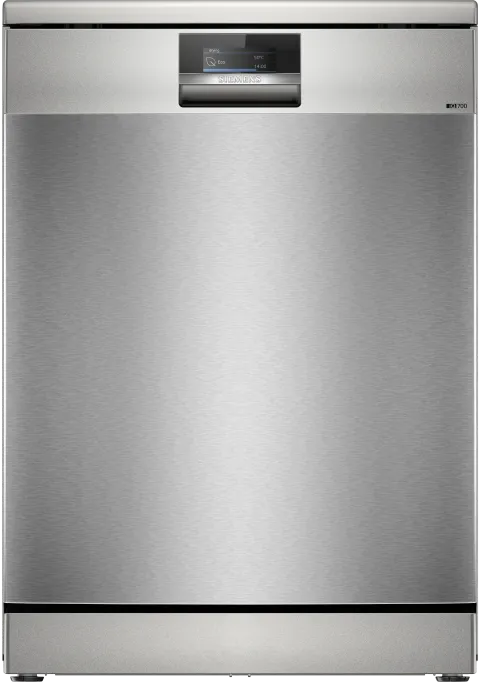
iQ700 SN27TI02CE
Siemens
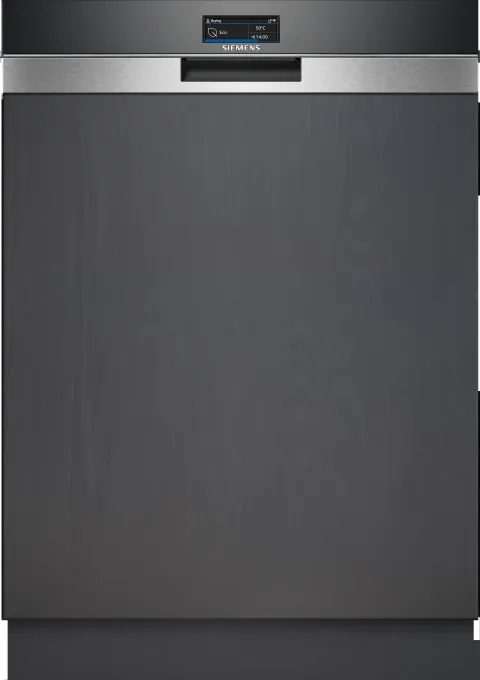
iQ700 SN57TS00CE

LG
DB476TXS
Related categories
Frequently asked questions
Does a longer dishwasher eco cycle mean it uses less energy? +
Not reliably. Across the 38 dishwashers in this catalog that publish both figures, cycle length and energy use only correlate at -0.41, a moderate but unreliable relationship, and two Bosch models with the identical 295-minute cycle land two energy-class letters apart (A and C).
Why do dishwashers with the same eco-cycle length end up in different energy classes? +
A longer eco cycle is one way to lower energy use (slower heating, more soak time), but it is not the only factor; motor efficiency, insulation, and heat-pump-style water heating vary by tier and brand even when the clock time is identical.
Is a shorter eco cycle a sign of a cheaper or lower-quality dishwasher? +
Not necessarily. The shortest eco cycle in this catalog, 195 minutes, still reaches energy class C at 59 kWh per 100 cycles, close to a 240-minute cycle's class C at 75 kWh, a short wait is not automatically the worst efficiency.
What should I check instead of the advertised cycle time? +
Check the published energy class and the kWh-per-100-cycles figure directly, from the manufacturer's datasheet or the appliance's EPREL registration, rather than assuming a longer eco cycle guarantees better efficiency.
Sources
- Bosch - Serie 2 SMS2HTW08E official product page
- Bosch - Serie 8 SMS8TCI04E official product page
- Bosch - Serie 2 SMI2HTS08E official product page
- Siemens - iQ700 SN27TI02CE official product page
- LG - DB476TXS official product page
- EPREL - Bosch Serie 2 SMS2HTW08E energy label registration
- EPREL - Bosch Serie 8 SMS8TCI04E energy label registration
- European Commission - Energy-efficient products (energy label and ecodesign)
More from the blog