Same 650W Motor, 8 Decibels Apart
Five Bosch and Siemens cylinder vacuums share an identical 650W motor, yet span 64 to 72 decibels: price buys quieter engineering, not more power.
By Nora Fischer · Last updated 21 August 2026
Researched and drafted with AI language-model assistance from CompareHomeAppliances' own verified spec database and cited public sources, per our AI-content disclosure.
Standing between two similarly priced cylinder vacuums, the spec that actually predicts how loud your hallway gets is the noise rating in decibels, not the motor’s wattage. Five Bosch and Siemens models in our data share the exact same 650W motor, priced from 219 to 349 EUR, and still span 64 to 72 dB, an 8 decibel gap with power held completely constant. Three of those five are even tied at the identical 279 EUR price point. Same motor, same money in some cases, different noise.
Key takeaways:
- Five corded cylinder vacuums (Bosch and Siemens) share an identical 650W motor rating, priced 219 to 349 EUR, yet range from 64 to 72 dB, an 8 dB spread with power fixed.
- Three of those five models are tied at exactly 279 EUR (68, 69 and 69 dB), meaning the price is identical too and the noise reading is still the only real point of difference.
- Across all 13 corded cylinder vacuums with both figures published, noise falls tier by tier as price rises: 78.75 dB average under 150 EUR, 75.4 dB from 150 to 250 EUR, 67.5 dB at 250 EUR and above.
- The single highest-power model in the dataset, the Siemens Z 3.0 extreme power at 850W, is still 77 dB, louder than every model in the cheaper 650W matched group, so wattage does not track noise on its own.
- The EU’s vacuum cleaner energy label was annulled by the courts and no longer exists for these products, so there is no letter grade to check either way; the spec sheet is all you have.
Does a bigger motor mean a louder vacuum?
Not in any way you can rely on. The clearest test is the five models that all carry the same 650W motor rating: the Siemens Q5.0 extreme silencePower at 219 EUR (72 dB), the Bosch Serie 6 bagless at 279 EUR (68 dB), the Bosch Serie 8 bagged at 279 EUR (69 dB), the Siemens Z 7.0 at 279 EUR (69 dB), and the Bosch Serie 8 Pro Silence bagless at 349 EUR (64 dB). Power is identical across all five. Price moves by 130 EUR. Noise moves by 8 dB.
An 8 dB gap is not a rounding error. Decibels are logarithmic, and a rough rule of thumb treats every 10 dB drop as roughly half as loud to the ear, so 8 dB gets you most of the way from “audible across the flat” to “you’d have to be in the room to notice.” That is the practical difference between the loudest and quietest machines in this matched-power group, on an otherwise identical spec.
Wattage stops meaning anything once you look past this matched group, too. The Siemens Z 3.0 extreme power carries the highest motor rating in the whole set, 850W, and it still measures 77 dB, louder than four of the five 650W models above and priced at just 159 EUR. Several of the cheapest models, all rated at a modest 600W, are the loudest vacuums in the dataset at 79 to 80 dB. A bigger number on the motor spec does not buy a quieter machine, and it does not reliably buy a louder one either. It is close to irrelevant to the question a shopper standing in an appliance aisle is actually asking.
Why doesn’t a vacuum cleaner carry an energy label?
Because the one it used to have was struck down. The EU’s vacuum cleaner energy label, Commission Delegated Regulation (EU) 665/2013, was annulled by the EU courts, and the European Commission’s own current product page says so directly: “Energy labelling rules for VCs set in Commission Delegated Regulation (EU) 665/2013 have been annulled and these products no longer have an energy label.” Fridges, washing machines and dishwashers all still carry a current A to G letter you can check at a glance. Vacuums do not. There is no shortcut here, which is exactly why a direct spec comparison like this one is the only real tool a shopper has.
There is still a power ceiling, just not a labelling one. Ecodesign Regulation (EU) 666/2013 has capped the maximum input power of corded vacuum cleaners at 900W since 2017. The same European Commission page notes the regulation excludes a different set of products entirely: “Floor polishers, robot vacuums, mattress cleaners, and hand-held and cordless stick vacuum cleaners are excluded from these regulations.” That 900W cap applies specifically to corded cylinder models like the thirteen compared here, and every one of them, including the loudest, sits well under it; the highest motor rating in the set is 850W. So the manufacturers are not pushing against a legal power limit to buy quiet, and they are not being forced loud by it either. The cap explains why nothing in this dataset exceeds 850W. It does not explain the 8 dB spread among machines that all sit at 650W.
What actually explains the 8-decibel gap on identical motors?
Not bin size, which is the other spec a shopper might reach for as a proxy. Bin and bag capacity across all 13 models ranges from 2.0 to 5.0 litres and does not track price or noise in any consistent direction. The quietest, priciest model here, the Bosch Serie 8 Pro Silence at 349 EUR and 64 dB, has a 3.0 litre bin, squarely mid-pack, not the biggest in the set. If a bigger bin bought a quieter motor housing, you would expect to see it in that row. You don’t.
What is left is the part a spec sheet does not put a number on: motor mounting, cushioning and insulation inside the casing, and how cleanly the airflow path is engineered to move air without turbulence noise. None of that shows up as a bigger figure anywhere on the box, which is exactly why price tracks noise more reliably than any single published spec in this dataset. The full 13-model set below shows the same pattern holding at every price tier, not just inside the matched 650W group.
| Model | Price (EUR) | Noise (dB) | Motor power (W) | Bin/bag volume (L) |
|---|---|---|---|---|
| Siemens SynchroPower VS06A212 | 98.99 | 79 | 600 | 4.0 |
| Bosch Serie 2 (bagged) | 99.99 | 80 | 600 | 3.5 |
| Siemens Z 3.0 VSZ3B212 | 124 | 79 | 600 | 4.0 |
| Siemens iQ300 Plus Limited Edition VSP3AAAA | 129 | 77 | 750 | 4.0 |
| Bosch Serie 6 (bagged) | 159 | 75 | 600 | 4.0 |
| Siemens Z 3.0 extreme power VSZ3XTRM11 | 159 | 77 | 850 | 4.0 |
| Bosch Serie 4 (bagless) | 189 | 78 | 750 | 2.0 |
| Bosch Serie 4 (bagged) | 209 | 75 | 600 | 4.0 |
| Siemens Q5.0 extreme silencePower VSQ5X500 | 219 | 72 | 650 | N/A |
| Bosch Serie 6 (bagless) | 279 | 68 | 650 | 2.4 |
| Bosch Serie 8 (bagged) | 279 | 69 | 650 | 5.0 |
| Siemens Z 7.0 VSZ7X500 | 279 | 69 | 650 | 5.0 |
| Bosch Serie 8 Pro Silence (bagless) | 349 | 64 | 650 | 3.0 |
Look at the tiers rather than any single row and the trend is consistent: under 150 EUR averages 78.75 dB, 150 to 250 EUR averages 75.4 dB, and 250 EUR and above averages 67.5 dB. Price does not buy a different motor. It buys quieter engineering around the same one.
What should you actually check before you buy?
If you are choosing between two corded cylinder vacuums at a similar price, skip the wattage line on the box; it is not doing the job you think it is. Go straight to the decibel figure, the only spec in this data that actually separates a quiet machine from a loud one at a given price. There is no energy label to fall back on for a second opinion, so the two spec sheets, side by side, are the whole comparison. The compare tool will line up noise, power and price for any two models you are weighing without you having to open separate manufacturer pages.
The pattern holds cleanly at the top and bottom of this data. The Siemens SynchroPower VS06A212 is the cheapest model here at 98.99 EUR and one of the loudest at 79 dB. The Bosch Serie 8 Pro Silence costs 349 EUR for the same class of 650W motor carried by the Siemens Q5.0 extreme silencePower and the Bosch Serie 6 bagless, and it is the quietest machine in the entire set. Higher wattage does not mean a louder vacuum, and it does not mean a better-cleaning one either, at least not on any evidence this dataset can show you. If the noise rating is the thing you will actually live with every week, check it directly, and do not let the motor number talk you out of the number that matters.
Appliances in this analysis
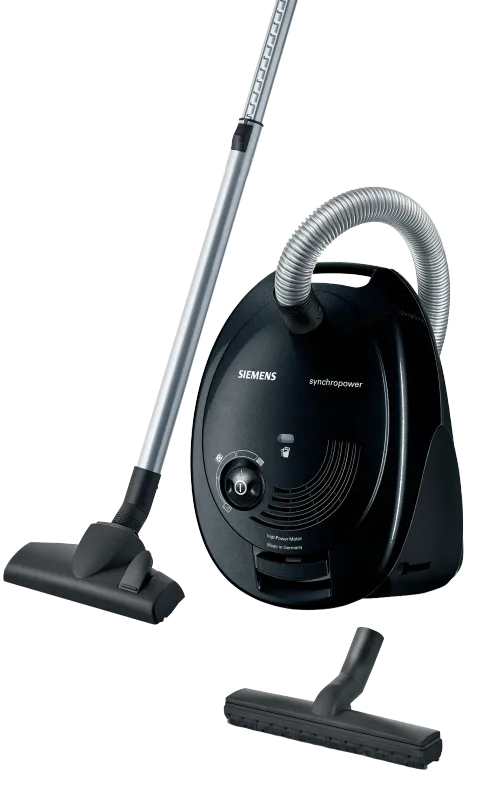
Siemens
synchropower VS06A212
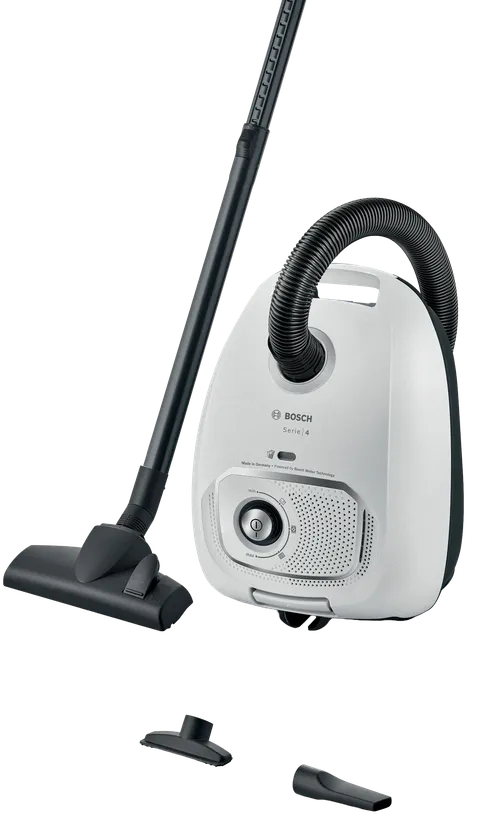
Bosch
Serie 4 (bagged)
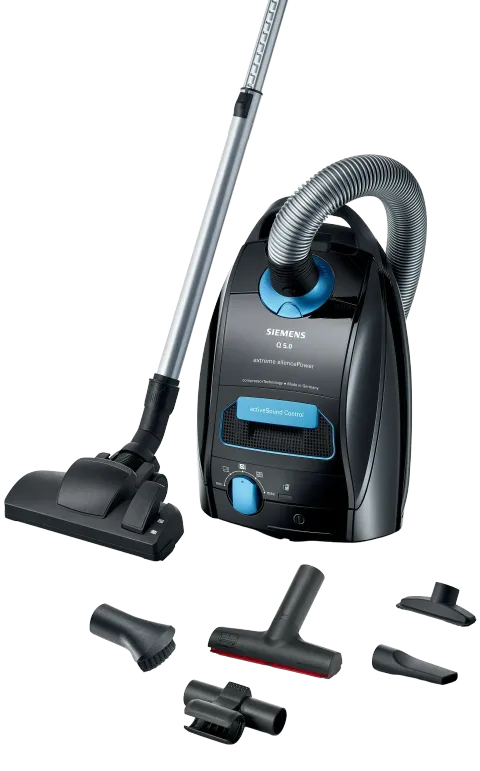
Siemens
Q5.0 extreme silencePower VSQ5X500
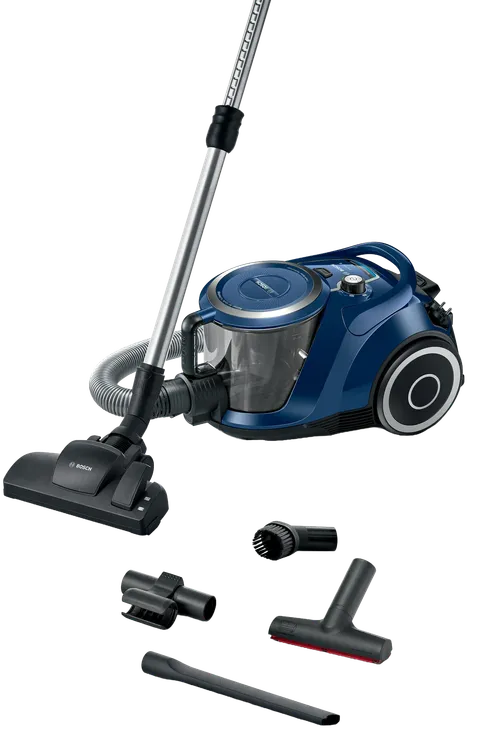
Bosch
Serie 6 (bagless)
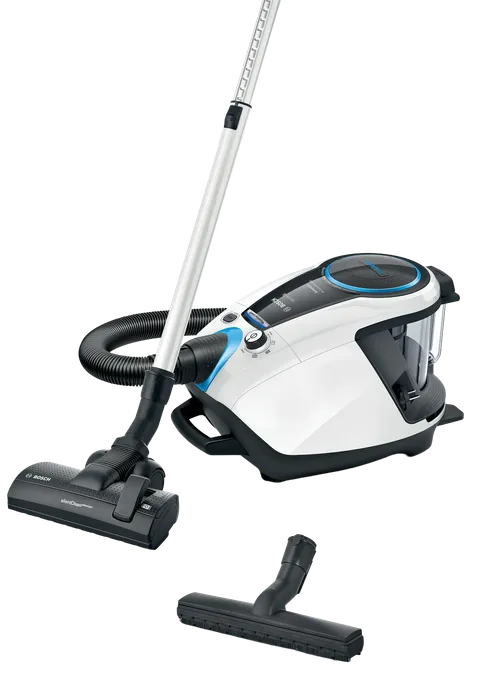
Bosch
Serie 8 Pro Silence (bagless)
Related categories
Frequently asked questions
Why don't vacuum cleaners carry an EU energy label the way fridges or dishwashers do? +
They used to have one, and now they have none. The EU's vacuum cleaner energy label, set out in Commission Delegated Regulation (EU) 665/2013, was annulled by the EU courts. Per the European Commission's own current page, 'Energy labelling rules for VCs set in Commission Delegated Regulation (EU) 665/2013 have been annulled and these products no longer have an energy label.' Unlike a fridge or a washing machine, there is no letter grade to lean on for a vacuum, for efficiency or for noise. You have to compare the spec sheets directly.
Does a higher-wattage motor mean a louder vacuum, or a better-cleaning one? +
Not on this evidence. The single highest-power model in our cylinder vacuum data, the Siemens Z 3.0 extreme power at 850W, still measures 77 dB, louder than every model in the matched 650W group priced above it. Meanwhile several 600W budget models are the loudest of all, at 79 to 80 dB. Wattage is an input power rating, not a cleaning-performance or noise guarantee, and it does not predict either one cleanly in this dataset.
Does a bigger dust bin or bag explain why the pricier vacuums are quieter? +
No. Bin and bag volumes in this dataset run from 2.0 to 5.0 litres scattered across every price tier with no consistent pattern. The quietest and priciest model here, the Bosch Serie 8 Pro Silence at 349 EUR and 64 dB, has a mid-pack 3.0 litre bin, not the largest in the set. Bin size and noise are unrelated variables on this evidence.
If the motor wattage is identical, what actually explains an 8-decibel gap? +
Acoustic engineering, not power headroom. EU Ecodesign rules have capped corded vacuum cleaners at 900W since 2017, and every model in this dataset, even the loudest ones, sits comfortably under that ceiling (the maximum here is 850W). So the manufacturers are not trading a power limit for a quiet one. The 8 dB spread across five identically rated 650W motors comes down to motor mounting, insulation, casing design and airflow path, the kind of engineering work that does not show up as a bigger number on the spec sheet.
Sources
- European Commission: Vacuum Cleaners (Ecodesign and Energy Labelling)
- Bosch: Serie 4 Bagged Vacuum Cleaner (BGB41WH1)
- Bosch: Serie 8 Bagged Vacuum Cleaner (BGL8XALL)
- Bosch: Serie 6 Bagless Vacuum Cleaner (BGC41XECO)
- Bosch: Serie 8 Pro Silence Bagless Vacuum Cleaner (BGS7SIL1)
- Siemens: SynchroPower VS06A212
- Siemens: Q5.0 extreme silencePower VSQ5X500
More from the blog